

What Makes a Divorce Appraisal Legally Defensible in New Jersey Courts?
A divorce appraisal is legally defensible in New Jersey courts when it is prepared by a state-certified appraiser, follows USPAP standards, uses a correct effective date, and documents a clear, evidence-based methodology. New Jersey Real Estate Appraisal Group (NJREAG) prepares these reports to withstand cross-examination and meet the strict evidentiary requirements of family law proceedings.
USPAP Compliance as the Foundation
The Uniform Standards of Professional Appraisal Practice (USPAP) is the national framework governing appraisal quality and ethics. In New Jersey, courts require that any appraisal used as evidence in a divorce be USPAP-compliant. This means the appraiser must adhere to Standards 1 and 2, which govern how the appraisal is developed and how the results are reported. An appraisal that fails to meet these standards can be challenged or rejected outright, leaving a party without credible support for their property division claims.
USPAP compliance ensures that the appraisal is not just an opinion, but a structured, standards-driven analysis. It requires the appraiser to identify the problem, define the scope of work, collect relevant data, and reconcile findings into a defensible conclusion. For New Jersey Real Estate Appraisal Group, this means every report includes a signed certification and full disclosure of the methodology used, creating a verifiable paper trail that judges and opposing counsel can review.
The Critical Role of the Effective Date
The effective date is the specific date as of which the appraiser determines the property's value. In divorce cases, this date is often tied to the date of separation or the filing of the divorce petition. Using the wrong effective date is one of the most common reasons appraisals are deemed legally insufficient. If the valuation date does not align with the legal requirements of the case, the resulting value may not reflect the property's worth at the time it needs to be divided.
New Jersey courts are strict about retrospective valuation rules. Under specific administrative orders, only data publicly available on the effective date may inform the opinion of value. This prevents appraisers from using future sales data to justify a current value. NJREAG ensures that the effective date is documented in writing before the assignment begins, protecting both parties from disputes over the timing of the valuation.
Documented Methodology and Comparable Sales
A legally defensible appraisal must clearly explain how the value was reached. This involves using one or more of the three recognized approaches: sales comparison, cost, and income. In most New Jersey residential divorce cases, the sales comparison approach is the primary method. The appraiser analyzes recent sales of comparable homes in the same area and adjusts for differences in size, condition, and features.
The key to defensibility is transparency. The report must show which comparable sales were selected, why they were chosen, and how adjustments were made. Vague or unsupported adjustments are red flags that courts and opposing experts will exploit. By providing a detailed narrative of the analysis, New Jersey Real Estate Appraisal Group ensures that the final value is not arbitrary but is the result of a logical, evidence-based process that can be explained under oath.
Impartiality and Expert Witness Credibility
Impartiality is a license requirement enforced by state law and USPAP. Every licensed appraiser must deliver an unbiased opinion of value regardless of who hired them. This ethical mandate is what makes their reports defensible in court. Courts prefer licensed appraisers who can withstand cross-examination over any informal estimate or broker opinion. That credibility protects both parties and gives attorneys a solid foundation to build on.
When an appraisal is challenged, the appraiser may be called to testify as an expert witness. This requires the appraiser to have courtroom experience and the ability to defend their methods clearly. NJREAG appraisers are prepared for this role, ensuring that the report they produce is not only accurate but also robust enough to survive the scrutiny of a contested divorce proceeding.
Report Structure and Legal Readiness
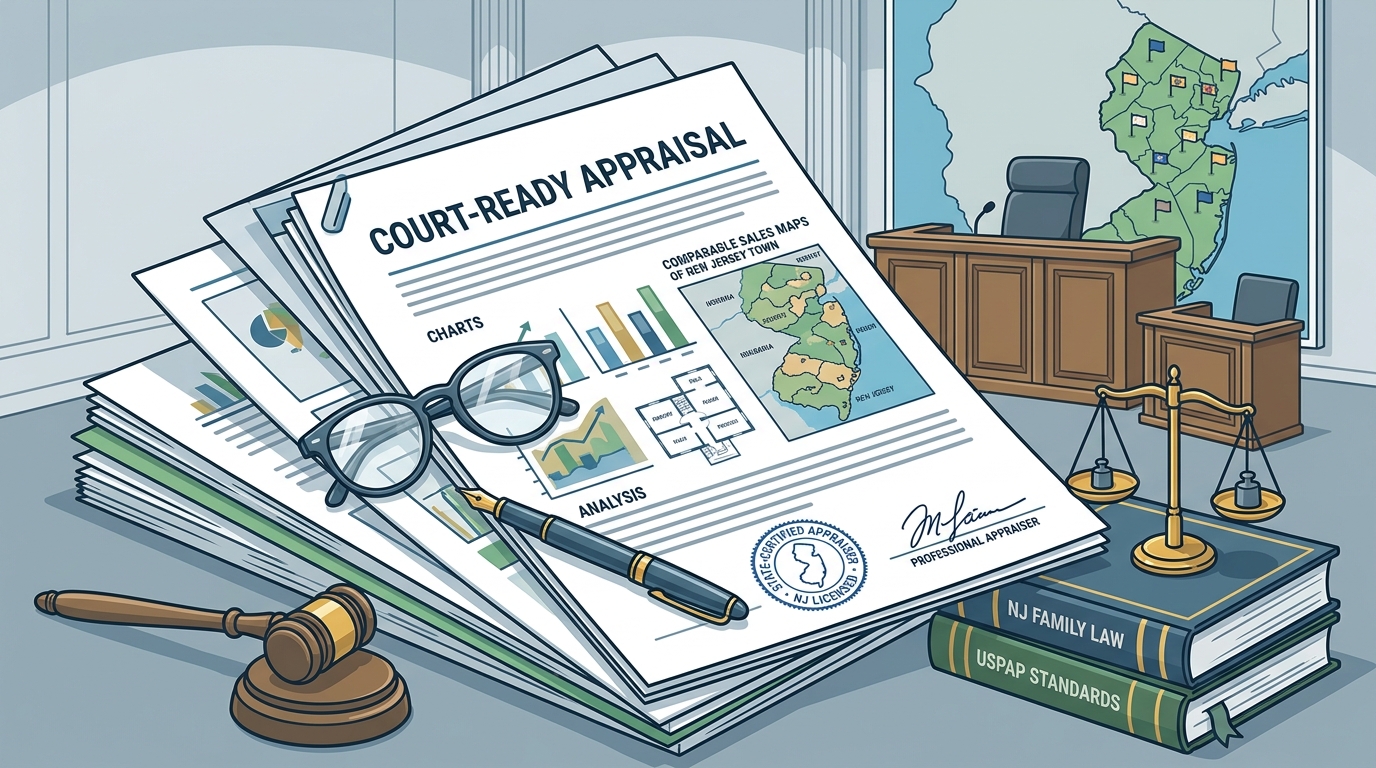
The structure of the appraisal report itself contributes to its legal defensibility. A court-ready report must be comprehensive, documenting the methodology, comparable sales, and final value in a clear and organized manner. It should be labeled as court-ready and follow qualified appraisal requirements. This ensures that the document meets the expectations of the court and the IRS, if applicable.
Common pitfalls that undermine defensibility include missing details, vague language, or incorrect effective dates. New Jersey Real Estate Appraisal Group reviews every report for these issues before delivery. By ensuring that the report is complete and compliant, we help clients avoid delays and costly legal challenges that can arise from a poorly prepared document.
Key Takeaways
- USPAP compliance is mandatory for any appraisal to be accepted as evidence in New Jersey divorce courts.
- The effective date must align with the legal timeline of the divorce, such as the date of separation or filing.
- Only data publicly available on the effective date can be used to support the valuation in retrospective cases.
- The sales comparison approach is the most common method for residential properties in New Jersey divorces.
- Transparency in selecting and adjusting comparable sales is critical for a defensible report.
- Appraisers must be impartial and capable of testifying as expert witnesses if the report is challenged.
- A well-structured, court-ready report prevents delays and legal disputes during settlement.
Frequently Asked Questions
What is USPAP and why does it matter for divorce appraisals?
USPAP is the Uniform Standards of Professional Appraisal Practice. It matters because New Jersey courts require appraisals to be USPAP-compliant to be admissible as evidence in divorce proceedings.
How is the effective date determined in a divorce appraisal?
The effective date is typically set by the court or agreed upon by the parties, often aligning with the date of separation or the filing of the divorce petition.
Can I use a Zillow estimate for my divorce settlement?
No, Zillow estimates are automated valuation models and are not considered credible evidence in New Jersey courts. A formal, certified appraisal is required.
Who should hire the appraiser in a divorce case?
Either party can hire the appraiser, but it is often best to jointly retain a neutral appraiser to ensure impartiality and reduce costs.
What happens if the appraisal is challenged in court?
If the appraisal is challenged, the appraiser may be called to testify as an expert witness to defend their methodology and conclusions.
How long does a divorce appraisal take in New Jersey?
A typical divorce appraisal takes 5 to 7 business days following the inspection, depending on the complexity of the property and data availability.