
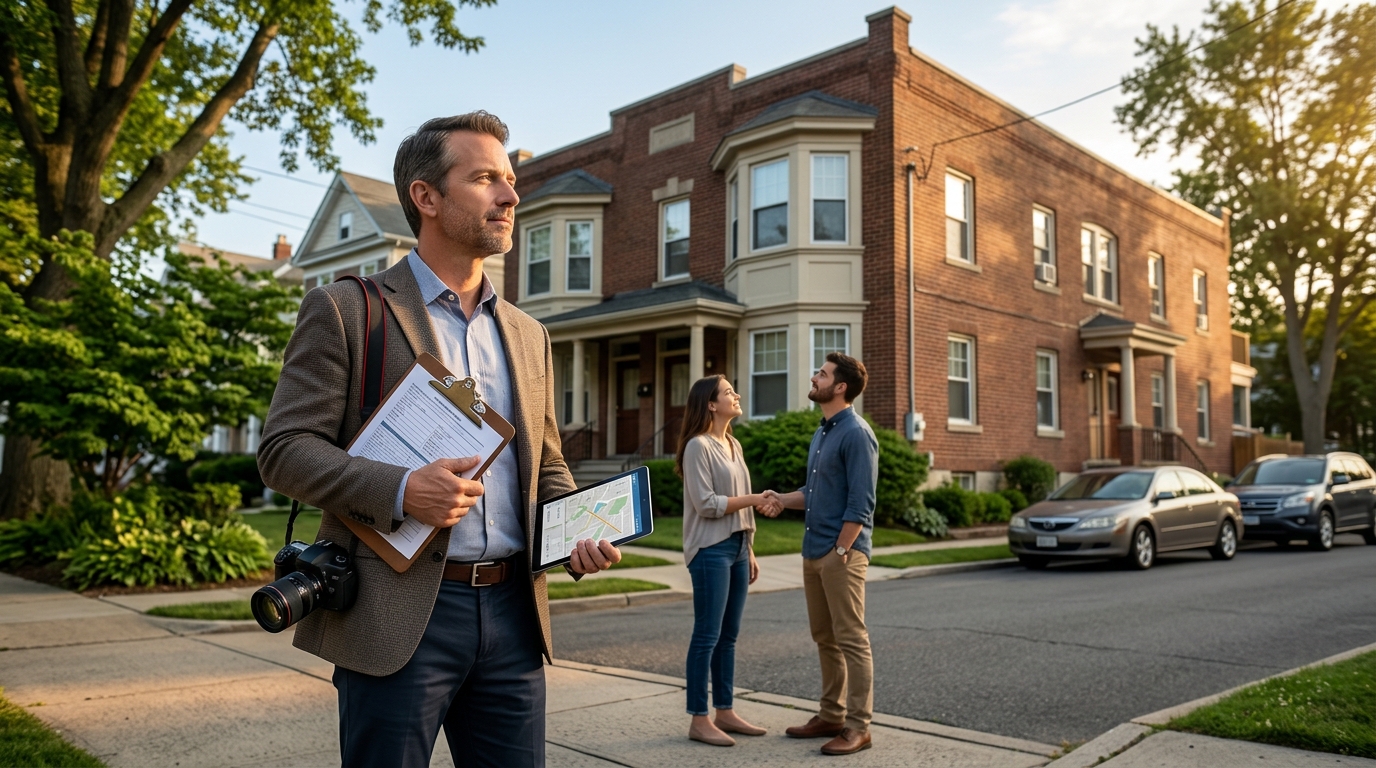
Hiring a Multi-Family Property Appraiser in New Jersey: A Step-by-Step Guide
Multi-family property valuations in New Jersey are significantly more complex than single-family home appraisals due to the reliance on income capitalization rather than just comparable sales. According to recent market analyses, the average rental vacancy rate in New Jersey hovers around 5.5%, making accurate income and expense verification critical for lenders and investors alike. This guide outlines the precise steps to hire a qualified appraiser who can deliver a defensible, court-ready valuation for your duplex, triplex, or larger residential portfolio. (About NJREAG New Jersey)
Understand the Complexity of Multi-Family Appraisals
Before contacting any professional, it is essential to recognize that multi-family appraisals require a specialized approach. Income approach valuation is the primary method used for properties with four or more units, though it is also frequently applied to smaller multi-family assets like duplexes and triplexes in New Jersey. This method relies heavily on the property's net operating income (NOI) and the current capitalization rates in the local market.
Unlike a single-family home, where the appraiser looks at what similar homes sold for, a multi-family appraiser must analyze the actual rent roll, operating expenses, and vacancy rates. If the appraiser lacks experience with income-producing properties, they may undervalue the asset by ignoring its cash flow potential or overvalue it by using outdated expense ratios. New Jersey Real Estate Appraisal Group has spent over 26 years refining this specific analytical process across all 21 counties, ensuring that the valuation reflects both the physical condition and the financial performance of the building.
Verify State Certification and USPAP Compliance
The first non-negotiable step is verifying the appraiser's credentials. In New Jersey, only state-certified appraisers are legally permitted to value commercial and multi-family residential properties. A state-licensed appraiser may handle single-family homes, but they cannot legally appraise a multi-unit building.
Additionally, the appraiser must adhere to the Uniform Standards of Professional Appraisal Practice (USPAP). USPAP compliance ensures that the appraisal report is defensible in legal proceedings, such as divorce settlements, estate probate, or tax appeals. When you review potential candidates, ask for proof of their state certification and their current adherence to USPAP. New Jersey Real Estate Appraisal Group provides USPAP-compliant, court-ready valuations that meet the strictest lender and regulatory standards.
Evaluate Local Market Expertise and County Coverage
New Jersey's real estate market is highly fragmented. A property in Atlantic County faces different market dynamics than one in Bergen or Morris County. You need an appraiser who understands the specific nuances of your county, including local zoning laws, tax assessment trends, and neighborhood desirability.
For instance, local New Jersey expertise is critical for accurate comparables selection. An appraiser familiar with the rental markets in Middlesex County will know which recent sales are truly comparable to a multi-family asset in that area. NJREAG serves all 21 New Jersey counties, including Atlantic, Bergen, Burlington, Camden, Cape May, and Union. This statewide coverage allows them to deploy appraisers who are already embedded in the local market data, reducing the risk of valuation errors due to geographic ignorance.
Assess Income and Expense Analysis Capabilities
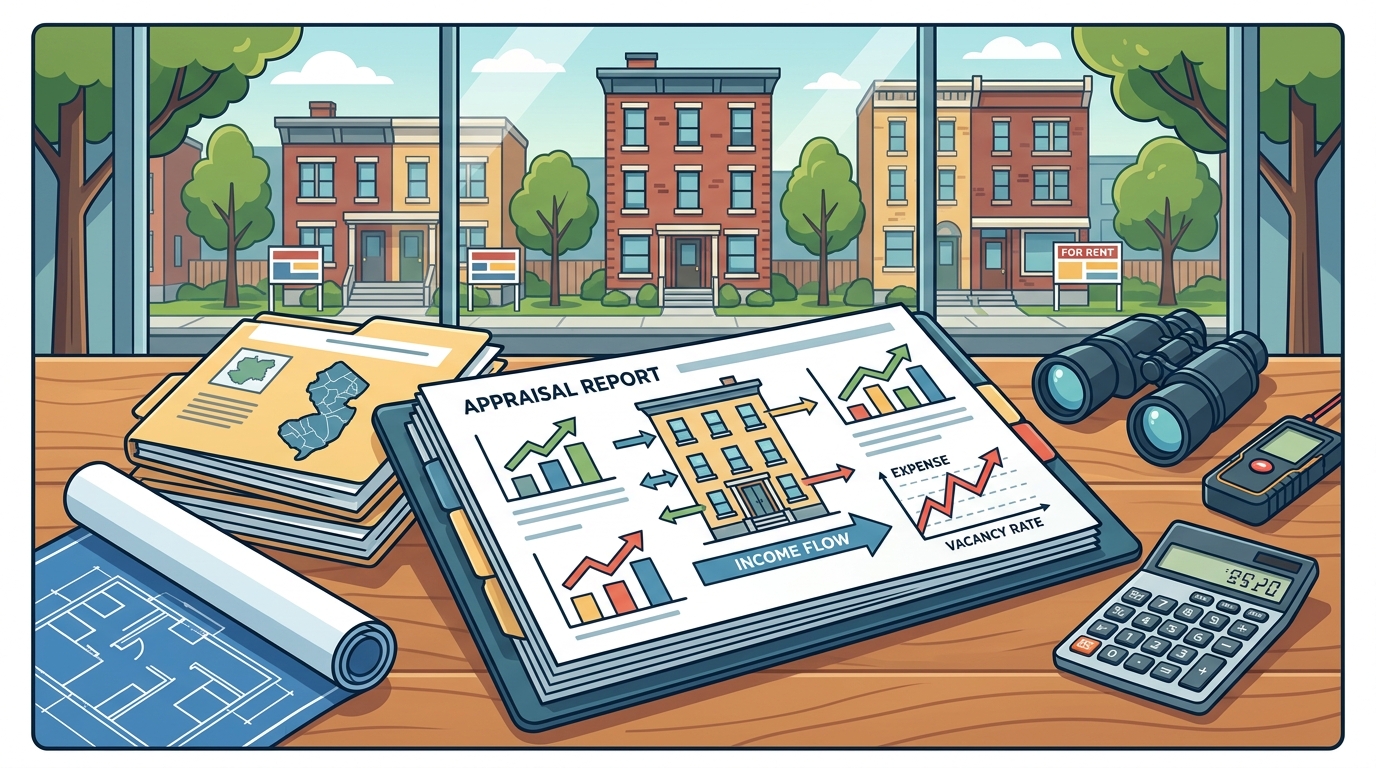
This is the most technical step in the hiring process. You must ensure the appraiser can perform a rigorous income and expense analysis. This involves verifying the current rent roll, assessing the stability of tenants, and estimating future expenses such as property taxes, insurance, and maintenance.
A high-quality appraisal report will include a detailed breakdown of the Net Operating Income (NOI). The appraiser should also analyze the capitalization rate (cap rate) trends in the specific sub-market. According to industry data, cap rates for multi-family properties in New Jersey can vary by up to 100 basis points depending on the county and property condition. An appraiser who uses generic, statewide cap rates rather than hyper-local data will produce an inaccurate valuation. NJREAG utilizes verified market data and income analysis to produce credible, verifiable appraisals that reflect the true income potential of your property.
Review Turnaround Times and Communication Protocols
Time is often a critical factor in real estate transactions. Whether you are refinancing, selling, or settling an estate, you need a valuation report quickly. However, speed should never compromise accuracy. It is important to ask potential appraisers about their standard turnaround times.
Many firms promise rapid delivery but fail to meet those deadlines, causing delays in loan closings or legal proceedings. New Jersey Real Estate Appraisal Group offers a commitment to efficiency, providing a turnaround time of 5-7 business days following the appraisal inspection. This balance of speed and quality is achieved through their use of cutting-edge data tools and technologies, which streamline the data collection and analysis phases without cutting corners.
Compare Service Packages and Pricing Models
Finally, compare the service packages and pricing structures of different appraisers. While cost is a factor, the cheapest option is often the most expensive if the valuation is challenged by a lender or a court. Look for transparent pricing that clearly outlines what is included in the fee.
| Service Type | Best For | Key Features | Typical Turnaround |
|---|---|---|---|
| Residential Multi-Family Appraisal | Duplexes, Triplexes, Four-Plexes | Income approach, comparable sales, condition assessment | 5-7 Business Days |
| Commercial Income Property Appraisal | Large Apartment Complexes, Mixed-Use | Deep income analysis, cap rate sensitivity, market trends | 7-10 Business Days |
| Tax Appeal Appraisal | Property Tax Reduction | Market value analysis for county boards, legal defense support | Varies by Deadline |
| Divorce Settlement Appraisal | Equitable Asset Division | Court-ready report, unbiased valuation, mediation support | 5-7 Business Days |
Key Takeaways
- State Certification is Mandatory: Only state-certified appraisers can value multi-family properties in New Jersey.
- Income Approach is Critical: Ensure the appraiser specializes in income capitalization and NOI analysis.
- Local Expertise Matters: Choose an appraiser familiar with your specific county's rental and sales markets.
- USPAP Compliance is Non-Negotiable: The report must meet Uniform Standards of Professional Appraisal Practice for legal and lender acceptance.
- Turnaround Time Varies: Standard reports typically take 5-7 business days after inspection, but complex commercial properties may require more time.
- Transparent Pricing: Avoid appraisers who do not provide clear, upfront fees for their services.
- 26+ Years of Experience: NJREAG has over two decades of experience serving all 21 New Jersey counties with accurate, defensible valuations.
Frequently Asked Questions
What is the difference between a state-licensed and state-certified appraiser?
A state-licensed appraiser can value single-family homes up to a certain transaction value. A state-certified appraiser is qualified to value any type of residential property, including multi-family units, and commercial properties, regardless of transaction value.
How long does it take to get a multi-family appraisal report in New Jersey?
Most standard multi-family appraisal reports are completed within 5-7 business days after the property inspection. Complex commercial properties or those requiring extensive market research may take longer.
Do I need a multi-family appraiser for a duplex or triplex?
Yes. While some lenders may accept a single-family appraisal for a duplex in certain refinancing scenarios, most investors and courts require a multi-family appraisal to properly analyze the income potential and comparable sales of income-producing properties.
What is a USPAP-compliant appraisal report?
USPAP stands for Uniform Standards of Professional Appraisal Practice. A USPAP-compliant report meets the ethical and performance standards set by the Appraisal Institute and the Appraisal Subcommittee, ensuring the valuation is credible and defensible.
How does NJREAG ensure accurate valuations for multi-family properties?
NJREAG uses verified market data, in-depth income analysis, and local expertise to produce valuations that reflect the true market value. They do not rely on automated valuation models, which often fail to capture the nuances of income-producing real estate.
Can NJREAG help with property tax appeals for multi-family buildings?
Yes. NJREAG provides certified market value appraisals specifically designed for New Jersey county and tax board appeals, helping property owners challenge excessive assessments.
What documents do I need to provide to the appraiser?
You will typically need to provide the current rent roll, recent property tax bills, insurance policies, and a list of recent capital improvements. This data helps the appraiser calculate the Net Operating Income accurately.
Request Your Multi-Family Appraisal Quote
Do not risk your investment on an inaccurate valuation. Whether you are refinancing a multi-family asset, navigating a divorce settlement, or preparing for a tax appeal, you need a partner who understands the complexities of New Jersey's income-producing real estate market. New Jersey Real Estate Appraisal Group offers state-certified, USPAP-compliant appraisals backed by 26+ years of experience. Contact us today to get a fast quote and schedule your inspection.