

Property tax appeals in New Jersey are among the most litigated administrative proceedings in the state. According to the New Jersey Department of the Treasury, local tax boards hear thousands of appeals annually, with the majority of successful cases hinging on precise procedural adherence rather than just property condition. Failing to understand the strict statutory deadlines and evidentiary requirements can result in a dismissed appeal, leaving property owners liable for the full assessed value for the entire tax year. This guide outlines the critical errors to avoid when navigating the New Jersey property tax appeal process.
Understanding the Basis for Appeal
Before filing an appeal, property owners must understand the legal grounds for challenging their assessment. In New Jersey, the primary basis for an appeal is that the assessed value of the property does not reflect its fair market value as of July 1 of the preceding year. This is a critical distinction because the assessment date is fixed, regardless of market fluctuations later in the year.
Fair market value is the price a willing buyer would pay a willing seller, neither being under duress. Many homeowners mistakenly believe they can appeal based on their inability to pay taxes or the condition of their home relative to neighbors, rather than the mathematical disparity between the assessment and actual market value. To succeed, the appeal must demonstrate that the assessment is arbitrary, capricious, or unreasonable compared to the true market value.
For a deeper understanding of how assessments are calculated, you can review our expert articles on property valuation which detail the methodologies used by state-certified appraisers.
Missing the Strict Filing Deadlines
The most common and costly mistake in New Jersey property tax appeals is missing the statutory filing deadline. The deadline for filing an appeal is typically July 1st of the tax year, or 45 days after the receipt of the tax bill, whichever is later. However, for many municipalities, the July 1st deadline is absolute for most property types.
If you miss this window, you generally lose the right to appeal for that entire tax year. The New Jersey Tax Court enforces these deadlines strictly, with very limited exceptions for excusable neglect. It is imperative to verify the specific deadline with your local tax assessor's office early in the year. Do not wait until the last minute to gather documentation, as the preparation of a robust appeal package takes time.
Relying on Inadequate Evidence
Many property owners submit appeals based solely on their own opinion of the property's value or the opinions of real estate agents. While a real estate agent's Comparative Market Analysis (CMA) can provide a general sense of value, it is often not sufficient for a formal tax appeal. Tax boards require objective, verifiable data that meets specific evidentiary standards.
An appraisal is a documented opinion of value supported by factual data and professional analysis. To build a strong case, you need to provide recent sales data of comparable properties, detailed information about your property's characteristics, and any evidence of physical depreciation or functional obsolescence. Relying on vague assertions without supporting documentation is a frequent reason for appeal denials.
Ignoring Recent Comparable Sales
Comparable sales, or "comps," are the cornerstone of any successful property tax appeal. However, many homeowners select comps that are not truly comparable. A valid comp must be similar in size, age, condition, location, and utility to the subject property. Sales that occurred too far in the past may not reflect current market conditions, especially in volatile markets.
When selecting comps, ensure they were sold at arm's length and are located in the same neighborhood or subdivision. If your property has unique features, such as a pool, a finished basement, or significant upgrades, you must account for these differences in your analysis. Failure to adjust for these differences can lead to an inaccurate conclusion of value. For insights on how professional appraisers select and analyze comps, visit our services page.
Procedural Errors in Documentation
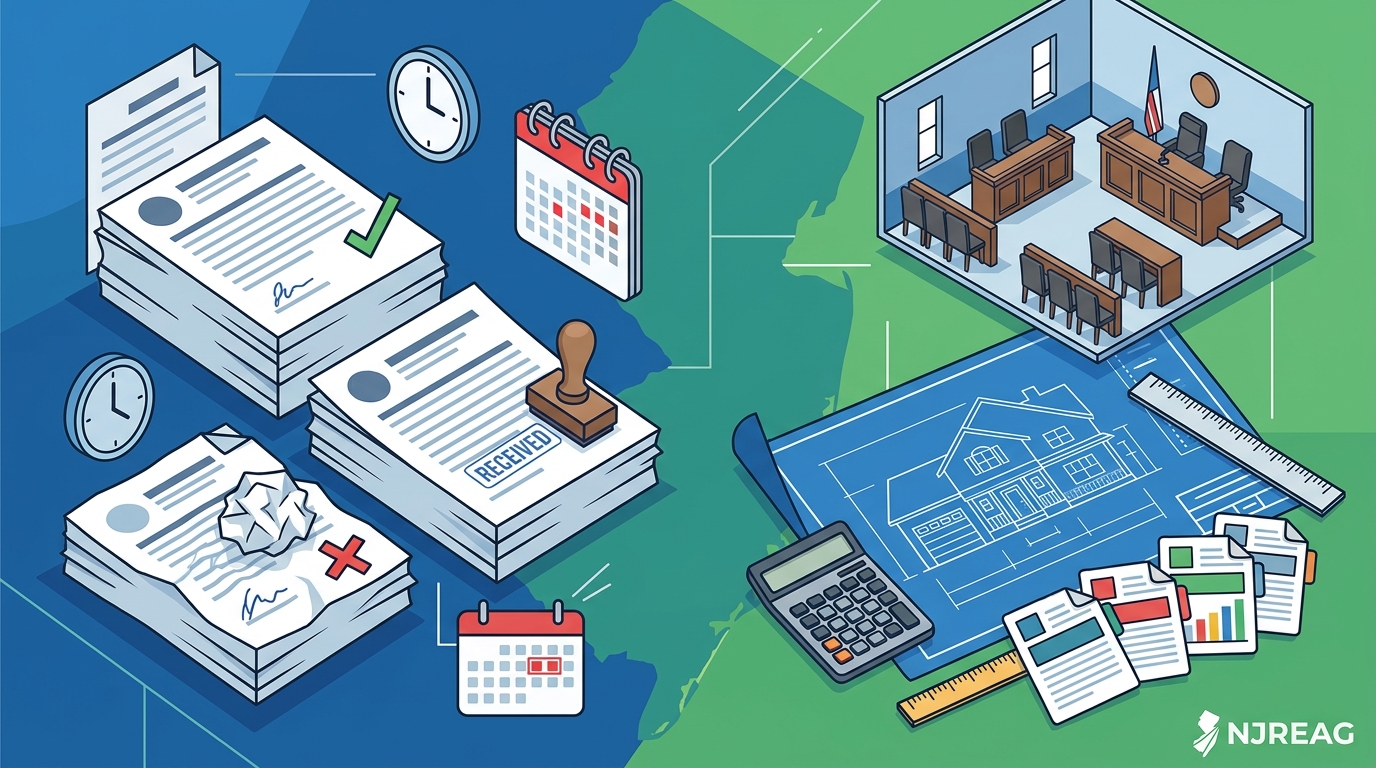
New Jersey tax appeals require strict adherence to procedural rules. This includes filing the correct forms, paying any required fees, and serving copies of the appeal to the appropriate parties. Errors in the paperwork, such as incorrect property identification numbers or missing signatures, can lead to the dismissal of the appeal without a hearing.
Additionally, property owners must respond to interrogatories and requests for additional information from the tax board or the municipality's attorney. Ignoring these requests or providing incomplete answers can severely weaken your case. It is advisable to keep a detailed log of all communications and submissions related to your appeal.
When to Seek Professional Appraisal Assistance
Given the complexity of the New Jersey property tax appeal process, many property owners benefit from hiring a state-certified appraiser. Professional appraisers have access to comprehensive sales data, advanced valuation software, and the expertise to navigate the legal and procedural requirements of tax appeals.
A state-certified general appraiser provides an unbiased, defensible opinion of value that is often more persuasive to tax boards than homeowner-submitted data. NJREAG has over 26 years of experience helping New Jersey property owners with tax appeal appraisals. Our Camden County appraisal services and Bergen County appraisal services are tailored to meet the specific needs of local tax boards.
For a comprehensive overview of our appraisal methodologies, read our article on divorce settlement appraisals, which highlights the rigorous standards we apply to all valuation reports.
Key Takeaways
- Deadline Criticality: Appeals must typically be filed by July 1st or 45 days after the tax bill, whichever is later. Missing this deadline forfeits your right to appeal for the year.
- Evidentiary Standards: Personal opinion or real estate agent CMAs are often insufficient. Objective data from state-certified appraisers is preferred.
- Comparable Sales: Use recent, arm's-length sales of truly comparable properties in the same area. Adjust for differences in size, condition, and features.
- Procedural Compliance: Strict adherence to filing forms, fees, and response requirements is mandatory to avoid dismissal.
- Professional Expertise: NJREAG's 26+ years of experience ensures USPAP-compliant reports that stand up to scrutiny in tax court.
- Assessment Date: The value date is July 1 of the preceding year. Market changes after this date do not affect the appeal for that tax year.
- Local Knowledge: Understanding the specific practices of your local tax board and municipality is crucial for a successful appeal.
Frequently Asked Questions
What is the deadline for filing a property tax appeal in New Jersey?
The deadline is generally July 1st of the tax year, or 45 days after the receipt of the tax bill, whichever is later. However, this can vary by municipality, so it is essential to confirm the exact date with your local tax assessor.
Can I appeal my property taxes if I disagree with the condition of my home?
You can appeal if the assessed value does not reflect the actual condition and value of your property. However, the appeal must be based on the disparity between the assessment and the fair market value, not just dissatisfaction with the condition.
Do I need a professional appraisal to file an appeal?
While not legally required, a professional appraisal from a state-certified appraiser significantly strengthens your case. Tax boards often give more weight to reports prepared by qualified professionals than to homeowner-submitted data.
How long does the property tax appeal process take?
The process can take several months, from filing the appeal to the final hearing and decision. It is important to be patient and responsive to all requests for information during this period.
What happens if I lose my property tax appeal?
If you lose, you may have the option to appeal to the New Jersey Tax Court. However, this involves additional costs and legal proceedings. It is advisable to consult with a tax attorney or appraiser before proceeding to the next level.
Can I appeal my property taxes every year?
Yes, you can file an appeal every year if you believe the assessment is incorrect. However, you must have new evidence or a change in market conditions to support a new appeal.
What is the role of the local tax board in the appeal process?
The local tax board reviews the appeal, considers the evidence presented by both the property owner and the municipality, and makes a determination on the assessed value. Their decision can be further appealed to the Tax Court.
Secure Your Property's Fair Value Today
Do not let common mistakes cost you thousands of dollars in property taxes. NJREAG provides expert, state-certified appraisal services designed to support successful tax appeals across New Jersey. Our team understands the nuances of local tax boards and the rigorous standards required for a defensible valuation.
Contact us today to schedule a consultation and learn how we can help you achieve a fair assessment. Visit our contact page to get a fast quote or call us at 908-517-3913.