

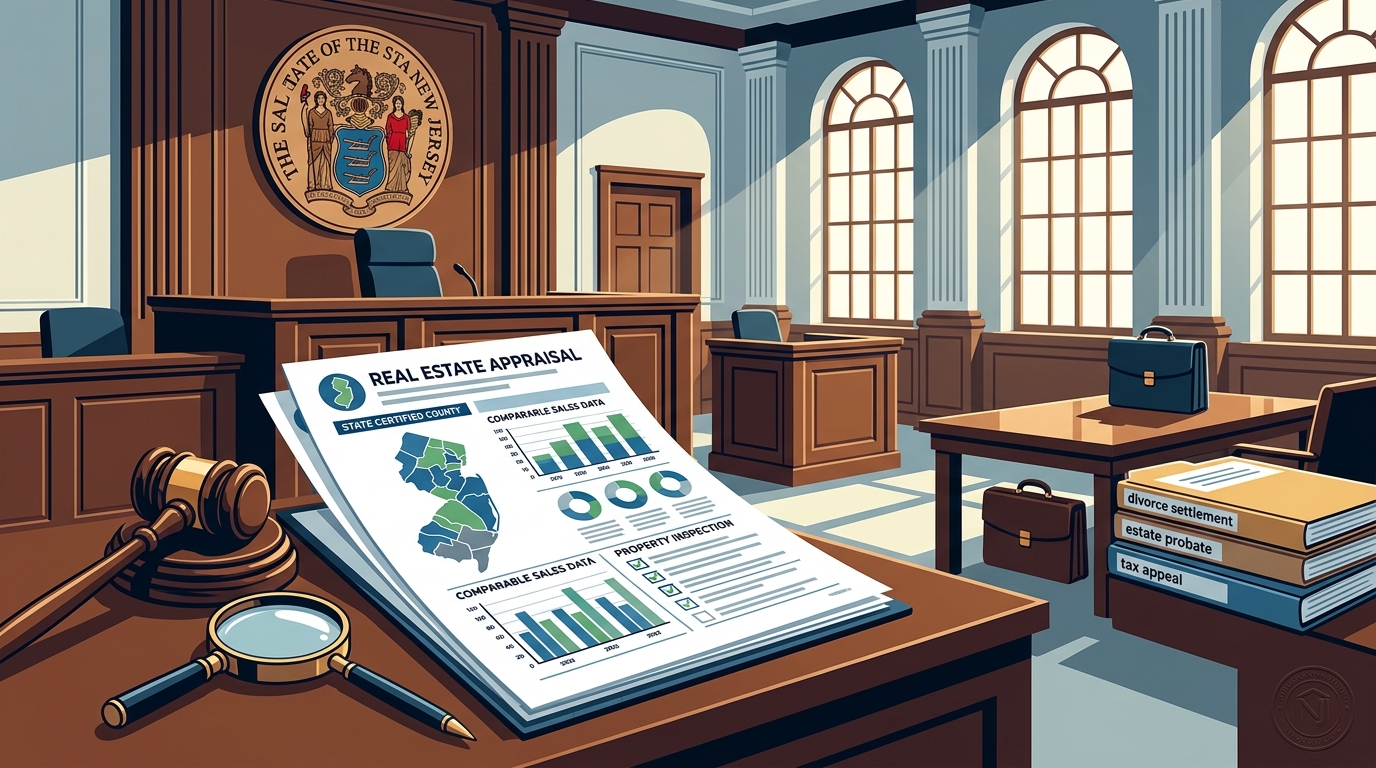
Real estate valuation disputes frequently escalate to litigation, where the admissibility of property value evidence hinges entirely on professional standards. According to the Uniform Standards of Professional Appraisal Practice (USPAP), appraisers must adhere to strict ethical and performance standards to ensure their reports withstand judicial scrutiny. In New Jersey, where property values fluctuate significantly across different counties, the margin for error in legal contexts is virtually nonexistent. This guide details how state-certified appraisers prepare defensible reports for divorce settlements, estate probate, and tax appeals.
Why Court-Ready Appraisals Matter
When a property dispute enters the legal system, the court does not rely on automated valuation models or online estimates. Judges and juries require a detailed, unbiased opinion of market value supported by verifiable data. A court-ready appraisal must withstand cross-examination from opposing counsel, meaning every data point and methodology must be defensible.
New Jersey courts have specific expectations for real estate evidence. The state’s complex municipal tax structures and diverse housing markets require appraisers who understand local nuances. For instance, a property in Bergen County may be valued differently than an identical home in Middlesex County due to school district boundaries and zoning laws. This is why New Jersey Real Estate Appraisal Group employs state-certified appraisers with deep local expertise.
Without a court-ready appraisal, parties risk having their valuation evidence excluded, leading to delayed proceedings or unfavorable settlements. The integrity of the legal process depends on the accuracy and objectivity of the appraisal report.
USPAP Compliance and Legal Admissibility
USPAP is the generally accepted ethical and performance standards for the appraisal profession in the United States. Any appraiser preparing a report for legal proceedings must be fully compliant with these standards. USPAP compliance ensures that the appraiser has maintained objectivity, independence, and confidentiality throughout the valuation process.
For legal professionals, verifying USPAP compliance is the first step in evaluating an appraiser’s credibility. Reports that fail to meet these standards are often challenged and may be deemed inadmissible. Our team at NJREAG produces reports that are not only compliant but also tailored to the specific requirements of the court.
Key components of a USPAP-compliant legal appraisal include:
- Scope of Work: Clearly defined parameters of the inspection and analysis.
- Data Sources: Verified public records and multiple listing service (MLS) data.
- Methodology: Transparent explanation of the sales comparison, income, or cost approaches used.
- Assumptions and Limiting Conditions: Explicit statements regarding the report’s intended use.
By adhering to these rigorous standards, we ensure that our clients have the strongest possible evidence for their legal matters.
Divorce Settlement Appraisals
Divorce proceedings often involve the division of marital assets, with the family home being the most significant asset for many New Jersey families. An accurate, unbiased appraisal is crucial for equitable distribution. Courts in New Jersey require a fair market value determination to ensure that both parties receive a just share of the property’s equity.
Our divorce appraisal services are designed to provide court-ready valuations that support mediation or litigation. We understand the emotional and financial stress involved in these cases, which is why we prioritize speed and accuracy. Our reports are prepared to withstand the scrutiny of family court judges and attorneys.
Key considerations in divorce appraisals include:
- Date of Valuation: Typically the date of separation or filing, depending on state law.
- Marital vs. Separate Property: Distinguishing between assets acquired during the marriage and those owned prior.
- Equitable Distribution: Providing a clear basis for calculating buyout amounts or sale proceeds.
Choosing a state-certified appraiser with experience in family law matters ensures that your valuation is both legally sound and financially fair.
Estate and Date-of-Death Valuations
When a property owner passes away, determining the fair market value of their real estate is essential for estate settlement and probate. The Internal Revenue Service (IRS) requires accurate valuations to calculate estate taxes and distribute assets among beneficiaries. An incorrect valuation can lead to significant tax liabilities or legal disputes among heirs.
Our estate appraisal services focus on establishing the date-of-death value, which is the standard for federal and state estate tax purposes. We provide detailed reports that document the property’s condition, location, and comparable sales data to support the valuation.
Probate courts also require clear documentation of asset values to ensure fair distribution. Our appraisers work closely with estate attorneys to provide the necessary documentation for court filings. This includes:
- Date-of-Death Appraisal: Establishing the value at the time of the owner’s passing.
- Retrospective Appraisals: Determining the value at a past date if required by the court.
- Inventory Reports: Detailed lists of real and personal property for estate administration.
By providing precise and defensible valuations, we help executors and beneficiaries navigate the complex probate process with confidence.
Property Tax Appeal Appraisals
New Jersey property owners have the right to appeal their municipal tax assessments if they believe the value is inflated. However, a successful tax appeal requires a professional appraisal that demonstrates the fair market value is lower than the assessed value. Municipal tax boards and the Board of Taxation require robust evidence to support such appeals.
Our tax appeal appraisal services are tailored to meet the specific requirements of New Jersey’s tax appeal process. We analyze recent sales data, property conditions, and market trends to build a compelling case for a reduced assessment.
Key factors in tax appeal appraisals include:
- Comparative Market Analysis: Using recent sales of similar properties in the same municipality.
- Property Condition: Documenting any deficiencies that lower the property’s value.
- Market Trends: Analyzing local market conditions to support the valuation.
Working with an experienced appraiser who understands the nuances of New Jersey tax law is critical for a successful appeal. Our team has a proven track record of helping property owners achieve fair tax assessments.
Service Comparison for Legal Needs
Understanding the differences between various appraisal services is essential for selecting the right professional for your legal matter. The table below outlines the key distinctions between our primary legal appraisal services.
| Service Type | Primary Use Case | Valuation Date | Key Legal Standard |
|---|---|---|---|
| Divorce Appraisal | Equitable asset division | Date of Separation/Filing | USPAP Compliance |
| Estate Appraisal | Probate and tax settlement | Date of Death | IRS Guidelines |
| Tax Appeal Appraisal | Municipal tax reduction | Assessment Period | NJ Tax Board Standards |
Key Takeaways
- USPAP Compliance is Mandatory: All court-ready appraisals must adhere to Uniform Standards of Professional Appraisal Practice to be admissible in New Jersey courts.
- Local Expertise is Critical: Valuations in New Jersey vary significantly by county, requiring appraisers with deep local market knowledge.
- Divorce Settlements Require Precision: Accurate property valuations are essential for equitable distribution of marital assets in family court.
- Estate Valuations Impact Taxes: Date-of-death appraisals are crucial for calculating estate taxes and distributing assets fairly among heirs.
- Tax Appeals Need Robust Evidence: Successful tax appeals require detailed comparative market analysis and documentation of property conditions.
- State-Certified Appraisers are Required: Only state-certified professionals can provide the level of detail and authority needed for legal proceedings.
- Turnaround Time Matters: Legal proceedings often have strict deadlines, making prompt delivery of appraisal reports essential.
Frequently Asked Questions
What makes an appraisal "court-ready"?
A court-ready appraisal is a detailed report prepared by a state-certified appraiser that adheres to USPAP standards. It includes comprehensive data analysis, clear methodology, and defensible conclusions that can withstand legal scrutiny.
Do I need a specific type of appraiser for divorce?
Yes, it is advisable to use an appraiser with experience in family law matters. They understand the specific requirements of New Jersey courts for equitable distribution and can provide valuations that are tailored to legal proceedings.
How long does it take to get a court-ready appraisal?
Typically, our team provides a turnaround time of 5-7 business days following the inspection. However, expedited services may be available for urgent legal matters.
Can an online valuation be used in court?
No, courts generally do not accept automated online valuations as evidence. They require a professional appraisal that includes a physical inspection and detailed market analysis.
What is the difference between a date-of-death appraisal and a current market appraisal?
A date-of-death appraisal determines the property’s value at the specific time of the owner’s passing, which is required for estate tax purposes. A current market appraisal reflects the property’s value at the present time.
How do tax appeal appraisals help reduce property taxes?
By providing a professional valuation that demonstrates the fair market value is lower than the municipal assessment, tax appeal appraisals support the case for a reduced tax burden.
What documents do I need to provide for an estate appraisal?
You will typically need the deed, any existing surveys, and information about recent improvements or repairs. Our appraiser will guide you through the specific requirements for your case.
Are your appraisers licensed in all New Jersey counties?
Yes, our state-certified appraisers are licensed to provide services across all 21 counties in New Jersey, ensuring local expertise wherever your property is located.
Request Your Legal Appraisal
When your property value is on the line in a legal proceeding, you need a partner you can trust. New Jersey Real Estate Appraisal Group provides the expertise, accuracy, and speed required for court-ready valuations. Contact us today to schedule your appraisal and ensure your legal interests are protected.