
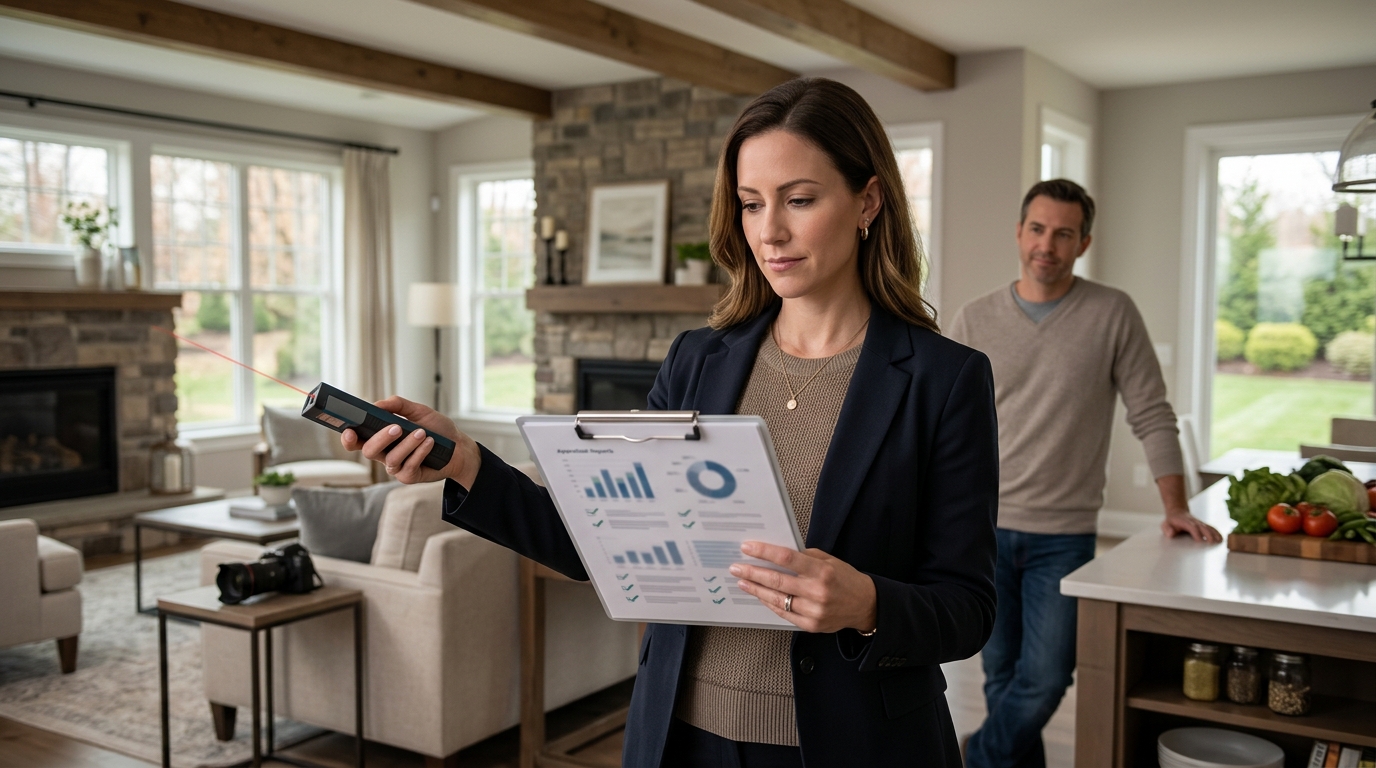
Property valuation in New Jersey is not a guessing game. It is a rigorous scientific process governed by federal standards and state licensing requirements. According to the National Association of Realtors, the median home price in New Jersey has consistently remained among the highest in the United States, making precise valuation critical for financial stability. When lenders, courts, or tax boards demand a property value, they require more than a number. They require a defensible, data-backed justification that withstands legal and financial scrutiny. This guide explains how state-certified appraisers ensure pricing accuracy and justify value in compliant New Jersey appraisal reports. (About NJREAG New Jersey)
Understanding Pricing Accuracy in NJ
Pricing accuracy refers to the degree to which an appraised value reflects the true market value of a property at a specific point in time. In New Jersey, this accuracy is not derived from automated algorithms alone. It is the result of meticulous analysis by state-certified professionals who understand local market dynamics. A common misconception is that an appraisal is merely a cost estimate. This is incorrect. An appraisal is an opinion of value based on verified data. (Bergen County NJ Appraisals)
Market volatility in New Jersey can shift rapidly due to interest rate changes, zoning updates, or regional economic shifts. For example, data from the New Jersey Department of Labor indicates that labor market fluctuations in counties like Middlesex and Monmouth directly impact residential demand. Appraisers must account for these macroeconomic factors to ensure their reports remain accurate and relevant. Without this depth of analysis, the resulting value justification may be rejected by lenders or challenged in court. (Camden County NJ Appraisals)
Accuracy also means transparency. Clients need to understand how the final number was derived. This is why compliant reports include detailed explanations of comparable sales, adjustments, and market conditions. The goal is to provide a clear audit trail that supports the final valuation. (Atlantic County Real Estate)
The Role of USPAP Compliance
The Uniform Standards of Professional Appraisal Practice (USPAP) is the gold standard for real estate appraisal in the United States. USPAP compliance ensures that every appraisal report meets ethical and performance standards set by the Appraisal Standards Board. For New Jersey appraisers, adhering to USPAP is not optional. It is a legal and professional requirement.
USPAP dictates how appraisers must conduct their research, analyze data, and report their findings. It requires objectivity, independence, and confidentiality. When an appraiser produces a USPAP-compliant report, they are certifying that the value opinion is unbiased and supported by credible data. This compliance is crucial for the report to be accepted by financial institutions, courts, and government agencies.
In the context of value justification, USPAP provides the framework for explaining the "why" behind the "what." It requires appraisers to disclose the scope of work, the data sources used, and the reasoning behind any adjustments made to comparable properties. This level of detail is what separates a professional appraisal from a simple price estimate. For more information on professional standards, you can refer to the Appraisal Institute's guidelines on ethical practices.
Valuation Methodologies and Data Analysis
New Jersey Real Estate Appraisal Group utilizes three primary valuation methodologies to ensure pricing accuracy. Each method is selected based on the property type and the purpose of the appraisal.
The Sales Comparison Approach
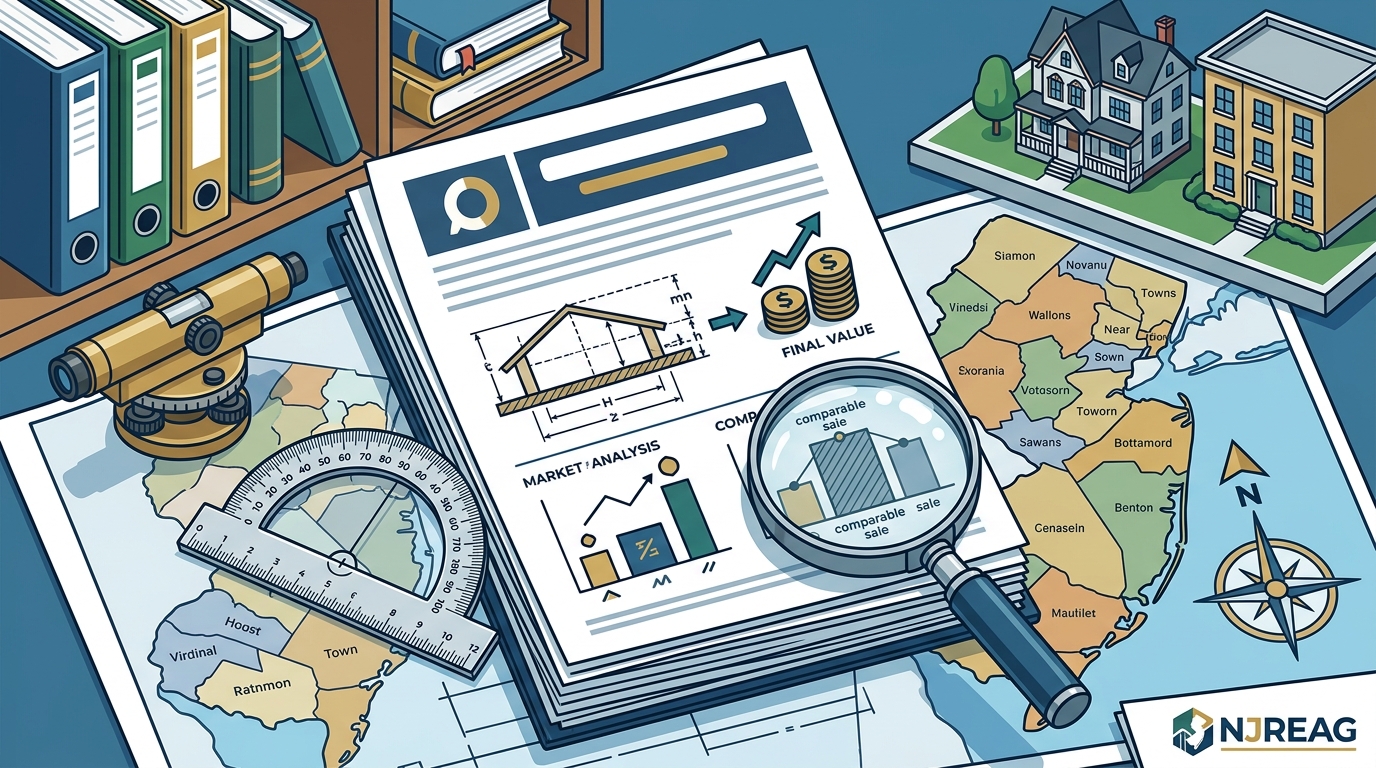
This is the most common method for residential properties. It involves comparing the subject property to similar properties that have recently sold in the same area. Appraisers analyze factors such as square footage, condition, location, and amenities to make adjustments. The goal is to determine what a willing buyer would pay a willing seller in an arm's length transaction.
The Income Approach
For commercial and income-producing properties, the income approach is essential. This method estimates value based on the property's ability to generate income. Appraisers analyze rental rates, occupancy levels, and operating expenses to calculate the net operating income. This data is then capitalized to determine the property's value. According to the International Council of Shopping Centers, commercial real estate values are heavily influenced by cap rate fluctuations, making this analysis critical for accuracy.
The Cost Approach
The cost approach estimates the value of the land plus the cost to replace the existing structures, minus depreciation. This method is particularly useful for new constructions or unique properties where comparable sales are scarce. It provides a baseline value that helps justify the price in markets with limited data.
Critical Applications for Accurate Valuations
Accurate pricing justification is vital in several high-stakes scenarios. In New Jersey, these applications often involve legal or financial consequences if the value is incorrect.
Divorce Settlements
In divorce proceedings, the family home is often the most significant asset. An accurate appraisal ensures equitable distribution of assets. NJREAG provides court-ready divorce appraisals that are unbiased and defensible. These reports are designed to withstand scrutiny from mediators and judges. For insights on preparing for such appraisals, see our article on divorce settlement appraisals.
Property Tax Appeals
New Jersey property taxes are among the highest in the nation. When homeowners believe their assessment is too high, they must provide evidence to the tax board. A certified appraisal report serves as this evidence. It justifies a lower value based on current market conditions and property specifics. This process can result in significant tax savings for property owners.
Estate and Probate
Date-of-death appraisals are required for estate settlement. The value of the property on the date of death determines the estate's tax liability and distribution to heirs. Accuracy is paramount here, as errors can lead to legal complications and financial loss. NJREAG specializes in these sensitive valuations, ensuring compliance with IRS regulations.
Appraisal Types Compared
Understanding the differences between appraisal types helps clients choose the right service for their needs. The table below summarizes the key distinctions.
| Appraisal Type | Primary Use Case | Key Methodology | Regulatory Focus |
|---|---|---|---|
| Residential Appraisal | Refinancing, Sales, Divorce | Sales Comparison | USPAP Compliance |
| Commercial Appraisal | Investment Analysis, Lending | Income Approach | IRS & Lender Standards |
| Tax Appeal Appraisal | Property Tax Reduction | Sales Comparison & Cost | County Tax Board Rules |
| Estate Appraisal | Probate, Inheritance | Sales Comparison | IRS Valuation Guidelines |
Key Takeaways
- USPAP Compliance is Mandatory: All compliant NJ appraisal reports must adhere to Uniform Standards of Professional Appraisal Practice to ensure legal validity.
- Data-Driven Accuracy: Pricing accuracy relies on verified market data, not automated models, ensuring defensible value justifications.
- Local Expertise Matters: NJREAG's 26+ years of experience across all 21 New Jersey counties provides critical context for accurate valuations.
- Court-Ready Reports: Divorce and tax appeal appraisals require specific formatting and evidence to withstand legal scrutiny.
- Multiple Methodologies: Using Sales Comparison, Income, and Cost approaches ensures a comprehensive analysis of property value.
- Timely Turnaround: NJREAG delivers reports within 5-7 business days, balancing speed with rigorous accuracy.
- State-Certified Professionals: Only state-certified appraisers can provide the level of authority required for high-stakes financial decisions.
Frequently Asked Questions
What is the difference between an appraisal and a home inspection?
An appraisal determines the market value of a property for financial or legal purposes. A home inspection evaluates the physical condition of the property, identifying potential repairs or safety issues. Both are important, but they serve different functions.
How long does it take to receive an appraisal report in New Jersey?
Typically, NJREAG provides appraisal reports within 5 to 7 business days after the property inspection. This timeline ensures thorough analysis while maintaining efficiency for clients.
Can an appraisal help lower my property taxes?
Yes. A certified appraisal report can serve as evidence in a property tax appeal. If the appraised value is lower than the assessed value, it may justify a reduction in your property tax assessment.
Why do New Jersey courts require state-certified appraisers?
State-certified appraisers have met rigorous education, experience, and examination requirements. Their certifications ensure that they possess the technical competence and ethical integrity to provide unbiased valuations in legal proceedings.
What data do appraisers use to justify value?
Appraisers use recent sales of comparable properties, current market trends, income data for commercial properties, and cost data for new construction. This multi-source data approach ensures a robust value justification.
Do you offer appraisals for all 21 counties in New Jersey?
Yes. NJREAG provides state-certified appraisal services across all 21 New Jersey counties, including Atlantic, Bergen, Camden, and Middlesex. Our local expertise ensures accurate valuations regardless of location.
What is USPAP and why is it important?
USPAP stands for Uniform Standards of Professional Appraisal Practice. It is the set of ethical and performance standards for appraisers in the United States. Compliance ensures that appraisal reports are credible and accepted by lenders and courts.
Request Your Certified Appraisal
Accurate pricing and value justification are essential for making informed real estate decisions in New Jersey. Whether you are navigating a divorce, appealing your property taxes, or settling an estate, you need a report that stands up to scrutiny. NJREAG provides the expertise, compliance, and accuracy you require.
Contact us today to schedule your appraisal. Visit our Contact Us page or call 908-517-3913 to get started. We serve homeowners, lenders, and attorneys across New Jersey with transparent, professional service.