

Yes, you can get an appraisal to remove Private Mortgage Insurance (PMI) from your New Jersey mortgage. Lenders typically require a formal, state-certified appraisal to verify that your home's value has increased enough to drop the insurance. This guide covers eligibility, the servicer approval process, specific requirements, and how to navigate the appraisal approval workflow.
PMI Removal Eligibility
Private Mortgage Insurance is a policy that protects the lender, not the borrower, when a loan has a high loan-to-value ratio. You generally become eligible to request PMI removal when your equity reaches 20% of the home's current value. This is distinct from the 80% loan-to-value ratio at the time of purchase. Many New Jersey homeowners assume they can simply ask for removal once they have paid down the principal, but the home's market value is the deciding factor.
Automatic vs. Manual Removal
Under the Homeowners Protection Act, lenders must automatically terminate PMI when the loan balance reaches 78% of the original value, provided you are current on payments. However, you can request manual removal earlier, once the balance hits 80% of the original value. If your home has appreciated, you may qualify for removal even if the balance is higher than 80% of the original value, provided the current value supports a lower ratio.
Why an Appraisal is Often Required
Lenders rarely accept a borrower's word that a home has appreciated. They require an independent, state-certified appraisal to verify the current market value. New Jersey Real Estate Appraisal Group specializes in these types of valuation assignments, ensuring the report meets the specific standards required by your mortgage servicer.
Servicer Approval Process
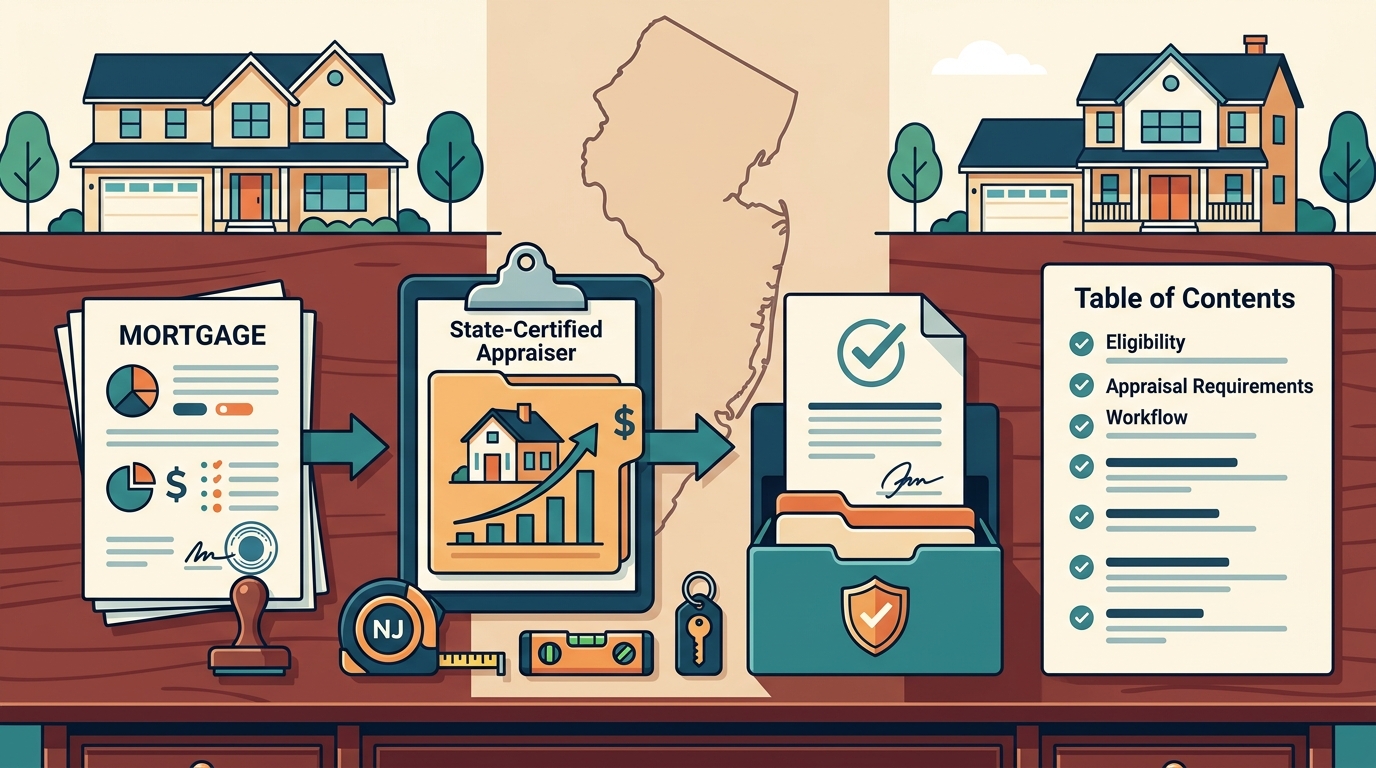
The servicer approval process is the administrative step where your mortgage company reviews your request and the appraisal report. This is not a guarantee of removal; it is a verification step. Your servicer will check if the appraisal meets their internal guidelines, which often include specific report formats and appraiser credentials.
Submitting the Request
Start by contacting your mortgage servicer's loss mitigation or customer service department. Ask for their specific PMI removal guidelines. Some servicers require a written letter, while others use an online portal. You must submit the request before the appraisal is ordered, or the appraisal may not be accepted if it does not match their pre-approved list of appraisers.
Review and Decision
Once the appraisal is delivered, the servicer reviews the value conclusion. If the new value supports a loan-to-value ratio of 80% or less, they will typically approve the removal. The decision usually takes 10 to 30 days after the report is received. If the value is insufficient, the servicer may deny the request, and you will continue paying PMI until the balance drops further or the value increases again.
PMI Removal Requirements
PMI removal requirements are the specific criteria your loan must meet to qualify for insurance termination. These requirements are set by the lender and the PMI insurer. Failing to meet even one minor requirement can result in a denied request.
Loan-to-Value Ratio
Payment History and Property Condition
You must be current on your mortgage payments. Most lenders require no late payments in the last 12 months and no missed payments in the last 24 months. Additionally, the property must be in good condition. If the appraisal notes significant deferred maintenance or structural issues, the servicer may deny the removal until those issues are resolved.
Appraisal Approval Process
The appraisal approval process involves selecting the right appraiser and ensuring the report format matches your servicer's needs. Not all appraisals are created equal. A standard mortgage appraisal may not be accepted for PMI removal if it lacks specific disclosures or if the appraiser is not on the servicer's approved panel.
Choosing the Right Appraiser
Check if your servicer has a preferred list of appraisers. If they do, you must use one from that list. If they do not, you can hire an independent state-certified appraiser. NJREAG provides state-certified appraisals across New Jersey, ensuring the report is USPAP-compliant and defensible. We tailor our reports to meet the specific requirements of PMI removal assignments.
Report Format and Delivery
Some servicers require a full narrative report, while others accept a brief or desktop appraisal. Confirm the required format before ordering. The report must be delivered directly to the servicer, not just to you. Electronic delivery is standard, but ensure the file format (PDF) is acceptable. The appraiser must be available to answer questions from the servicer's review team if needed.
| Requirement | Automatic Termination | Manual Request |
|---|---|---|
| Loan-to-Value Ratio | 78% of original value | 80% of current value |
| Appraisal Required | No (based on amortization) | Yes (state-certified) |
| Payment History | Current on payments | No late payments in 12 months |
| Property Condition | Not typically reviewed | Must be in good condition |
Key Takeaways
- Automatic termination occurs at 78% of the original value, but manual requests can be made earlier.
- A state-certified appraisal is typically required for manual PMI removal requests.
- Your mortgage servicer has specific guidelines for appraisal format and appraiser credentials.
- You must be current on payments and have a clean payment history to qualify.
- The property must be in good condition with no significant deferred maintenance.
- Working with a local, state-certified appraiser ensures the report meets New Jersey market standards.
- Always confirm your servicer's requirements before ordering an appraisal.
Frequently Asked Questions
Can I remove PMI without an appraisal?
In some cases, yes. If your loan balance has dropped to 78% of the original value, the lender must terminate PMI automatically without an appraisal. For manual requests at 80% of the original value, some lenders may accept a broker price opinion or a desktop appraisal, but a full state-certified appraisal is the most reliable method.
How much does a PMI removal appraisal cost in New Jersey?
Costs vary based on property size and complexity. Typically, residential appraisals in New Jersey range from $495 to $750. Complex properties or multi-family homes may cost more. Contact NJREAG for a firm quote based on your specific property.
What if my home has not appreciated?
If your home has not appreciated, you may not qualify for PMI removal until your loan balance drops further. You can still request an appraisal to establish the current value, but if the value does not support an 80% ratio, the servicer will deny the request. You will continue paying PMI until the balance decreases or the value increases.
Do I need to be on the servicer's approved appraiser list?
It depends on your servicer. Some large national lenders require you to use an appraiser from their preferred list. Others allow you to hire any state-certified appraiser. Check your servicer's PMI removal guidelines before ordering the appraisal to avoid having the report rejected.
How long does the entire process take?
The entire process, from request to removal, typically takes 4 to 8 weeks. This includes time to submit the request, schedule the inspection, complete the appraisal, and have the servicer review the report. The servicer's review period is often the longest part of the process.
Can I use a Zestimate or online estimate?
No. Lenders and PMI insurers do not accept automated valuation models (AVMs) like Zestimates for PMI removal. They require a physical inspection and a formal report from a state-certified appraiser. Online estimates are not defensible and do not meet professional appraisal standards.
What if the appraisal value is lower than I expected?
If the appraisal value is lower than expected and does not support an 80% ratio, the servicer will deny the removal request. You can continue paying PMI until the balance drops further or the market value increases. You can request a new appraisal in the future if you believe the value has changed significantly.