
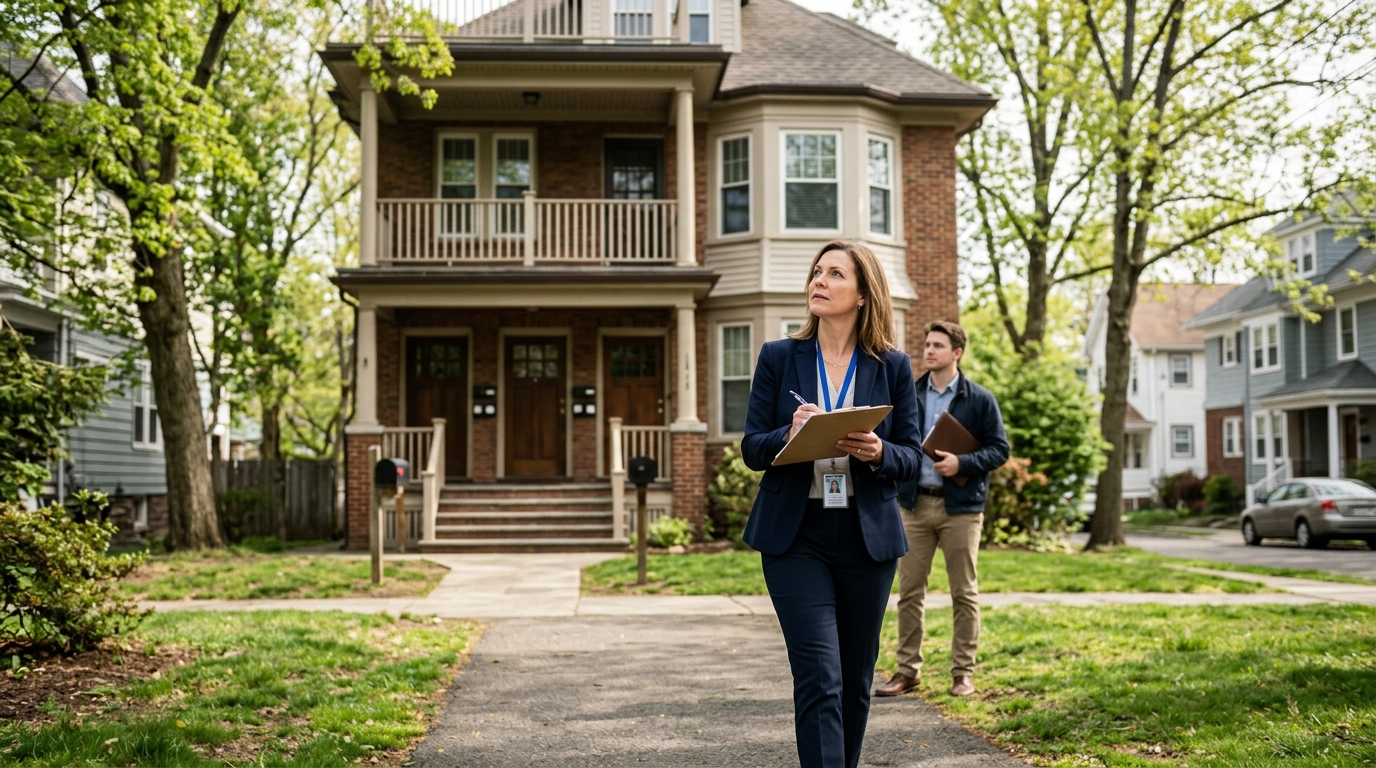
Homeowners and investors often ask where to hire a multi-family appraiser in New Jersey. The most reliable option is a state-certified general appraiser licensed by the New Jersey Real Estate Appraiser Board. New Jersey Real Estate Appraisal Group (NJREAG) provides these certified valuations for properties with two to four units, as well as larger commercial multi-family assets. This guide covers how to verify licensing, understand valuation methods, and select the right professional for your specific property type and legal need.
State Licensing Verification
Before hiring any professional, you must verify their credentials. A real estate appraiser is a licensed or certified individual who provides an unbiased opinion of property value. In New Jersey, the New Jersey Real Estate Appraiser Board regulates all appraisal activities. You can verify an appraiser's active status and certification level through the official state registry. This step ensures the professional is legally authorized to sign off on the valuation for your specific property type.
Certification Levels
New Jersey recognizes two primary levels of certification for appraisers: Residential and General. A residential appraiser is typically limited to valuing single-family homes and small properties. A general appraiser is certified to value all types of real estate, including commercial multi-family buildings. For a multi-family property, you generally need a general appraiser, especially if the building has more than four units or is used for commercial lending.
Why Verification Matters
Using an unlicensed individual or a residential-only appraiser for a complex multi-family asset can invalidate the report. Lenders, courts, and tax boards require reports from properly certified professionals. Verifying the license number on the state board website protects you from fraudulent services and ensures the appraisal meets legal standards. It is a simple step that prevents significant financial and legal headaches later.
Why Multi-Family Valuation Is Complex
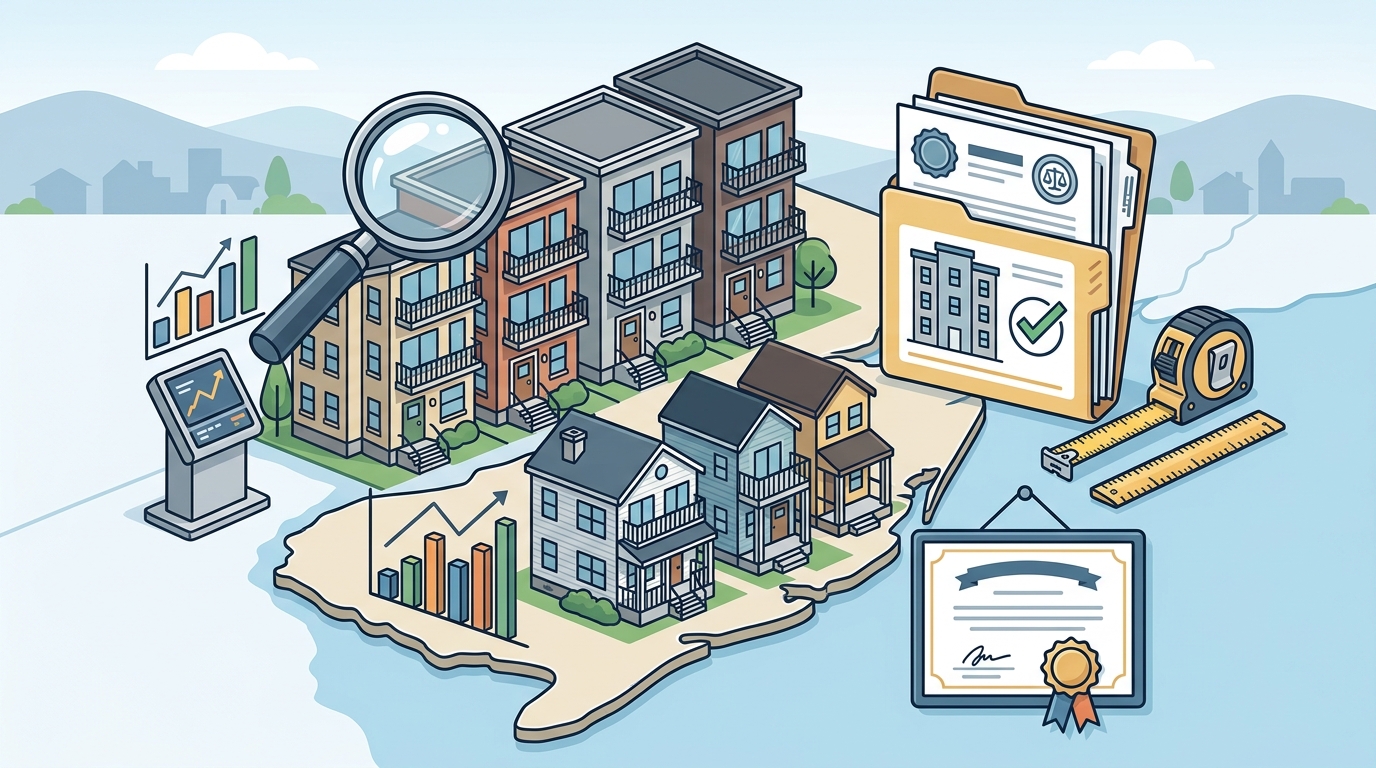
Valuing a multi-family property is significantly more complex than valuing a single-family home. A multi-family property is a residential building containing two or more separate housing units. These units can be apartments, townhouses, or condominiums. The complexity arises because the value is driven by income potential, not just physical features. An appraiser must analyze rent rolls, operating expenses, and market trends to determine the true value of the asset.
Income vs. Physical Features
In single-family homes, value is often based on square footage, condition, and location. In multi-family properties, the income stream is the primary driver. An appraiser must look at the Net Operating Income (NOI) to determine value. This requires a deep understanding of local rental markets and vacancy rates. If the property is in a high-demand area, the income potential may be higher, increasing the overall value.
Unit Mix and Condition
The mix of units also affects value. A building with a variety of unit sizes may appeal to different tenants. The physical condition of each unit matters, but so does the overall management of the property. An appraiser will inspect the common areas, mechanical systems, and individual units. They will also review the property's history of maintenance and capital improvements. This holistic view ensures the valuation reflects the asset's true earning power.
Core Appraisal Methods for Multi-Family
Appraisers use three main approaches to value real estate: the Sales Comparison Approach, the Cost Approach, and the Income Capitalization Approach. For multi-family properties, the Income Capitalization Approach is often the most critical. This method calculates value based on the property's ability to generate income. It is the standard for commercial and investment properties.
Income Capitalization Approach
The Income Capitalization Approach converts the property's net income into a present value. The appraiser starts with the gross potential income and subtracts vacancy and collection losses. They then deduct operating expenses to arrive at the Net Operating Income (NOI). Finally, they apply a capitalization rate (cap rate) to the NOI to determine the value. The cap rate reflects the risk and return of the investment in the local market.
Sales Comparison Approach
The Sales Comparison Approach looks at recent sales of similar multi-family properties. The appraiser identifies comparable sales and adjusts for differences in size, condition, and location. This method provides a market-based check on the income approach. It helps ensure the value is consistent with what buyers are actually paying for similar assets. In New Jersey, finding true comparables for multi-family properties can be challenging, requiring careful selection and adjustment.
Cost Approach
The Cost Approach estimates the value based on the cost to replace the property. It starts with the land value and adds the depreciated cost of the improvements. This method is useful for new or unique properties where comparable sales are scarce. It helps ensure the value does not exceed the cost of building a similar property. For older multi-family buildings, the cost approach may be less relevant but still provides a useful floor for the valuation.
Report Requirements and Compliance
All appraisal reports in New Jersey must comply with the Uniform Standards of Professional Appraisal Practice (USPAP). USPAP is the national standard for appraisal practice. It ensures that appraisals are ethical, unbiased, and well-supported. A USPAP-compliant report is required for most legal, lending, and tax purposes. It provides a defensible record of the valuation process and conclusion.
USPAP Compliance
Report Types
There are different types of appraisal reports, ranging from brief forms to detailed narrative reports. For multi-family properties, a detailed narrative report is often required. This type of report provides a thorough explanation of the valuation process. It includes detailed analysis of the income, expenses, and market conditions. Lenders and courts typically require this level of detail for complex assets. A brief form may be sufficient for some tax appeals, but a narrative report is safer for legal and lending purposes.
Finding the Right Appraiser in NJ
Choosing the right appraiser is critical for a successful valuation. You need a professional with specific experience in multi-family properties in New Jersey. Look for an appraiser who understands the local market dynamics and the specific challenges of your property type. New Jersey Real Estate Appraisal Group (NJREAG) offers state-certified appraisals for multi-family assets across the state. They provide USPAP-compliant reports that are trusted by lenders, attorneys, and investors.
Experience and Expertise
Ask the appraiser about their experience with multi-family properties. How many have they appraised in the last few years? Do they have experience with properties similar to yours in size and location? An appraiser with deep local knowledge will provide a more accurate and defensible valuation. They will understand the nuances of the local rental market and the factors that drive property values in New Jersey.
Communication and Turnaround
Good communication is essential. The appraiser should be responsive to your questions and provide clear updates on the progress of the appraisal. Ask about their typical turnaround time. For multi-family properties, the process may take longer than for single-family homes due to the complexity of the analysis. A reliable appraiser will give you a realistic timeline and stick to it. This helps you plan for any deadlines related to your transaction or legal matter.
Reputation and References
Check the appraiser's reputation and ask for references. Look for reviews or testimonials from past clients. A reputable appraiser will have a track record of delivering high-quality, defensible reports. They should be willing to provide references from lenders, attorneys, or other professionals who have used their services. This due diligence helps ensure you are working with a trusted professional who will meet your needs.
Key Takeaways
- Verify the appraiser's license on the New Jersey Real Estate Appraiser Board website.
- Use a general appraiser for multi-family properties, especially those with more than four units.
- The Income Capitalization Approach is the primary method for valuing multi-family assets.
- Ensure the report is USPAP-compliant for legal, lending, and tax purposes.
- Choose an appraiser with specific experience in New Jersey multi-family markets.
- Ask about the appraiser's turnaround time and communication style.
- Check references and reviews to assess the appraiser's reputation.
- New Jersey Real Estate Appraisal Group provides certified, court-ready multi-family appraisals.
Frequently Asked Questions
What is the difference between a residential and general appraiser?
A residential appraiser is certified to value single-family homes and small properties. A general appraiser is certified to value all types of real estate, including commercial multi-family buildings. For multi-family properties, you generally need a general appraiser.
How long does a multi-family appraisal take?
A multi-family appraisal typically takes longer than a single-family appraisal due to the complexity of the analysis. The timeline depends on the size of the property and the availability of comparable sales. A reliable appraiser will provide a realistic estimate of the turnaround time.
What is a cap rate?
A cap rate, or capitalization rate, is a metric used to estimate the value of an income-producing property. It is calculated by dividing the Net Operating Income (NOI) by the property's value. A higher cap rate indicates a higher risk or return.
Do I need an appraisal for a tax appeal?
Yes, a certified appraisal is often required for a property tax appeal. The appraisal provides evidence of the property's true market value, which can be used to challenge an over-assessed value. New Jersey Real Estate Appraisal Group offers tax appeal appraisals for multi-family properties.
Can I use a Zillow estimate for a multi-family property?
No, automated valuation models (AVMs) like Zillow are not reliable for multi-family properties. They do not account for the income potential and operating expenses that drive the value of these assets. A professional appraisal is necessary for an accurate and defensible valuation.
What documents do I need to provide for a multi-family appraisal?
You should provide the appraiser with the property's rent roll, operating expense statements, and any recent capital improvement records. You may also need to provide the property's tax assessment and any existing loan documents. The appraiser will guide you on the specific documents required for your property.
Is the appraisal report confidential?
Yes, appraisal reports are confidential and intended for the specific client and purpose stated in the report. You should not share the report with third parties without the appraiser's permission. This ensures the integrity of the valuation and protects your interests.
How much does a multi-family appraisal cost?
The cost of a multi-family appraisal varies based on the size and complexity of the property. It is best to request a quote from the appraiser directly. New Jersey Real Estate Appraisal Group provides competitive and transparent pricing for their appraisal services.
Conclusion
Hiring the right appraiser for your multi-family property in New Jersey is a critical step in protecting your investment. By verifying the appraiser's license, understanding the valuation methods, and ensuring USPAP compliance, you can secure a credible and defensible report. New Jersey Real Estate Appraisal Group (NJREAG) offers state-certified, court-ready appraisals for multi-family assets across the state. To plan your visit or request a quote, today.