

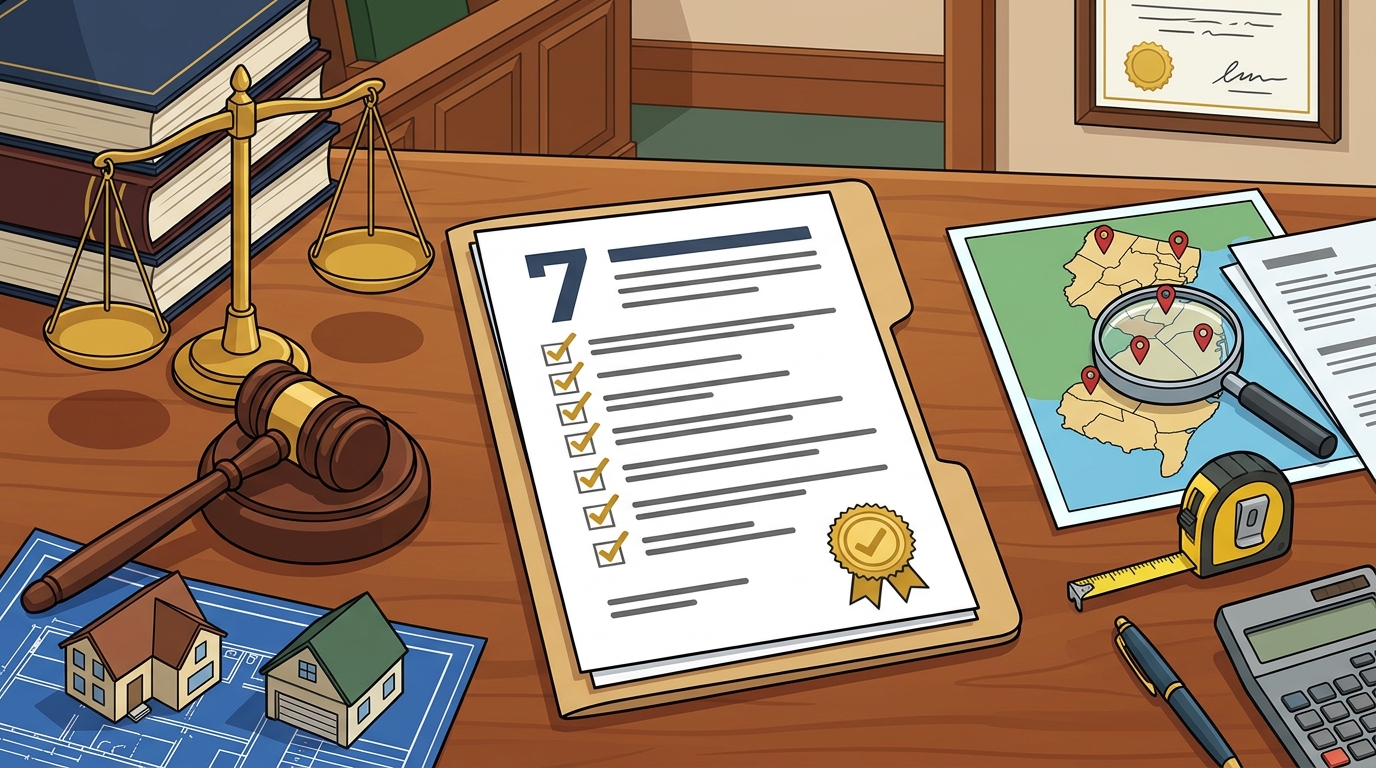
Choosing the right appraiser for a New Jersey property lawsuit requires more than finding a local professional. The appraiser must meet strict legal standards for expert testimony, including familiarity with the Federal Rules of Evidence and state-specific procedural rules. New Jersey Real Estate Appraisal Group (NJREAG) provides state-certified appraisers who specialize in litigation support, ensuring your valuation holds up under cross-examination in court.
1. State Certification and Licensing Status
Verify the appraiser holds an active New Jersey state certification. In New Jersey, only state-certified appraisers can provide legally defensible valuations for complex litigation. A certified appraiser has completed the required education, experience, and examination to meet the state's highest professional standards. This credential is the baseline for any expert witness in a property dispute.
2. USPAP Compliance in Reporting
Ensure the report strictly follows the Uniform Standards of Professional Appraisal Practice (USPAP). USPAP is the national ethical and performance standard for appraisers. Courts reject reports that deviate from these standards, as they undermine the credibility of the expert's methodology. A compliant report documents the scope of work, data sources, and analytical process with transparency.
3. Experience with Court-Ready Documentation
Look for a track record of producing reports designed for legal proceedings. Litigation appraisals differ from standard mortgage appraisals because they must withstand scrutiny from opposing counsel. The documentation must be clear, logical, and free of ambiguity. NJREAG's court-ready reports are specifically structured to support equitable distribution and litigation outcomes.
4. Availability for Testimony and Cross-Examination
Confirm the appraiser is willing and able to testify in person. An expert witness must be available for depositions and trial testimony. If the appraiser cannot appear, their report may be excluded as evidence. The appraiser must be prepared to explain their reasoning and defend their value conclusion against aggressive questioning from the opposing side.
5. Local Market Knowledge and Data Access
Assess the appraiser's depth of knowledge in the specific New Jersey municipality. Property values in New Jersey vary significantly by town, school district, and neighborhood. An expert witness must understand local market nuances, such as flood zones, zoning restrictions, and recent comparable sales. This local expertise ensures the valuation reflects true market conditions rather than generic algorithms.
6. Independence and Objectivity
Verify the appraiser has no financial conflict of interest with either party. Expert witnesses must remain impartial and unbiased. The appraiser's role is to provide an independent opinion of value, not to advocate for a specific outcome. Courts view any perceived bias as a fatal flaw in expert testimony, potentially disqualifying the entire valuation.
7. Communication Skills and Clarity
Evaluate the appraiser's ability to explain complex concepts to a jury. A strong expert witness translates technical appraisal data into plain language that judges and juries can understand. Clear communication builds credibility and helps the fact-finder grasp the significance of the valuation. The appraiser should be able to present their findings confidently without relying on jargon.
Choosing the Right Expert
Frequently Asked Questions
Can a residential appraiser testify in a commercial lawsuit?
Generally, no. A residential appraiser is certified to value single-family homes and small multi-family properties. Commercial litigation requires a General Certified appraiser who has the specific training and experience to value office, retail, or industrial properties. Using the wrong certification level can lead to the exclusion of testimony.
How far in advance should I hire an expert witness?
It is best to engage an expert witness as early as possible in the litigation process. Early involvement allows the appraiser to understand the case details, gather necessary data, and prepare a thorough report. This timeline also provides ample opportunity for the attorney to review the findings and prepare for depositions.
What is the difference between an appraisal and an audit?
An appraisal is an opinion of market value based on comparable sales and market conditions. An audit is a review of an existing appraisal to check for errors or compliance with standards. In litigation, you typically need a new, independent appraisal rather than an audit of a previous report, unless the previous report is being challenged specifically.
Do I need to pay the appraiser if my case settles?
Yes, the appraiser is typically paid for their services regardless of the case outcome. The fee covers the time spent inspecting the property, researching data, writing the report, and preparing for testimony. It is important to agree on the fee structure and any additional costs for testimony or depositions before the work begins.
Can the opposing side hire their own appraiser?
Yes, it is common for both sides in a property lawsuit to hire their own expert witnesses. Each appraiser will provide an independent opinion of value, which may differ. The court will then weigh the credibility and methodology of each expert to determine the most reliable valuation for the case. Learn more: Contact NJREAG Certified Appraisers.