
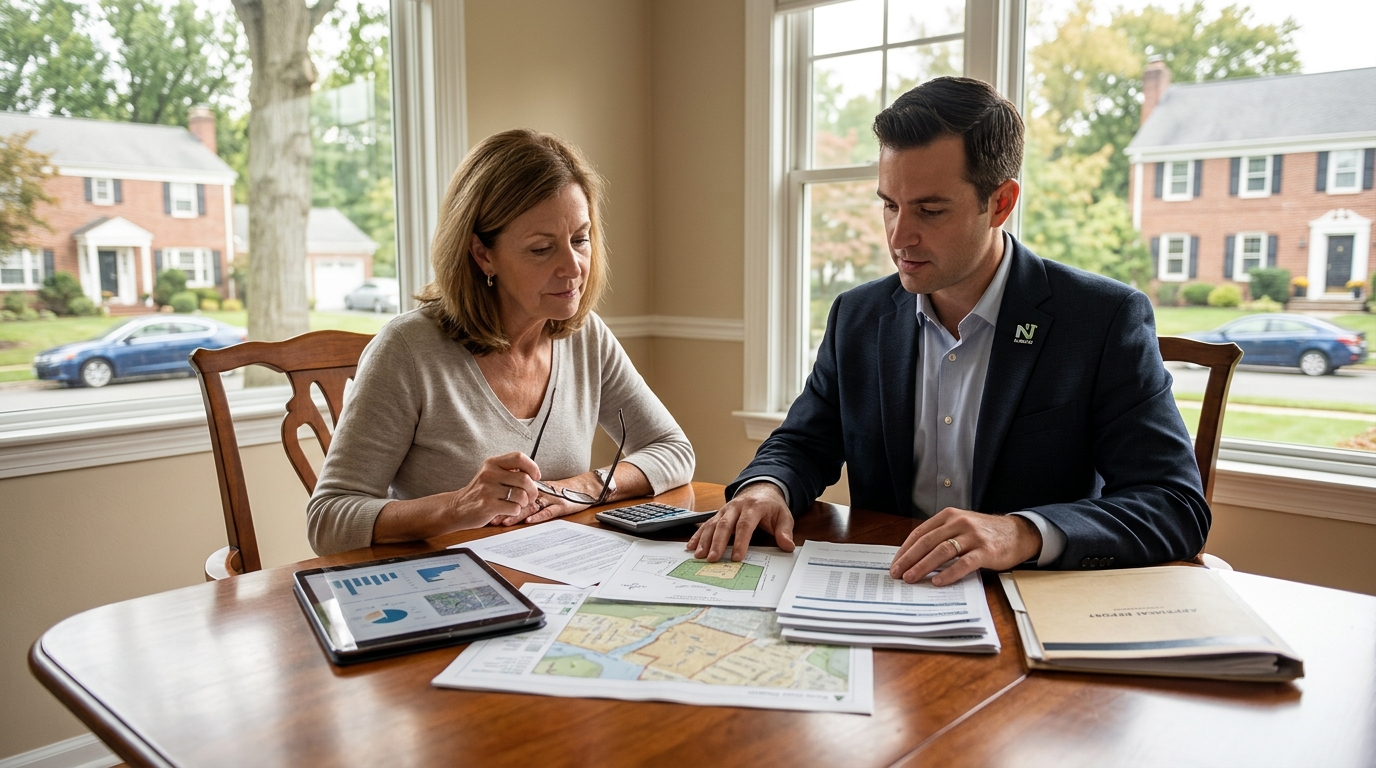
New Jersey consistently ranks among the states with the highest property tax burdens in the United States, creating a financial pressure point for homeowners and business owners alike. According to recent data from the Tax Foundation, the average effective property tax rate in New Jersey often exceeds 2.49%, significantly higher than the national average. This high baseline makes every dollar saved through a successful appeal critical for household budgets and commercial profitability. Understanding the precise mechanics of the New Jersey tax appeal process is not merely an administrative task; it is a strategic financial imperative that requires meticulous preparation and professional insight. (Bergen County NJ Appraisals)
Understanding the Basis of Your Appeal
The foundation of any successful property tax appeal in New Jersey rests on proving that the assessed value of your property exceeds its fair market value. In New Jersey, properties are reassessed annually, and the assessment roll is the primary tool used by county tax boards to determine your tax liability. If the municipality has raised your assessment based on a general revaluation or a specific property review, you have the right to challenge that figure.
It is crucial to distinguish between a market value appeal and a tax rate appeal. You cannot appeal the tax rate itself, which is set by local governing bodies. Instead, you must demonstrate that the assessed value assigned to your specific parcel is inaccurate. This requires a clear understanding of how your property compares to similar properties in your immediate vicinity. The concept of uniformity is central here; if your neighbor with a similar home was assessed lower, you have a strong argument for equitable treatment.
Gathering Compelling Evidence
Building a robust case requires more than just a disagreement with the number on your tax bill. You must compile a dossier of evidence that supports your claimed market value. This process involves analyzing recent sales of comparable properties, often referred to as "comps." These comparables should be similar in size, age, condition, and location to your property.
When selecting comparables, look for sales that occurred within the last six to twelve months prior to the assessment date. Properties sold in distressed conditions, such as foreclosures or short sales, are generally excluded from this analysis because they do not reflect true market value. Additionally, consider the physical condition of your property. If your home has suffered from deferred maintenance, structural issues, or functional obsolescence, these factors must be documented and quantified. Physical deterioration is a valid and powerful argument for reducing an assessment, provided it is substantiated by photos, repair estimates, or professional inspections.
Timing and Critical Deadlines
New Jersey has strict statutory deadlines for filing tax appeals, and missing these dates can result in the automatic dismissal of your case. The most critical deadline is typically January 1st for the following tax year. For example, to appeal the 2025 tax assessment, you generally must file your application by January 1, 2025. However, there are exceptions for newly constructed properties or those undergoing significant changes, which may have different filing windows.
It is advisable to monitor your local municipality's announcements closely. Some counties may have specific local rules or additional documentation requirements that must be met before the state deadline. Filing early is often a strategic advantage, as it gives you more time to negotiate with the municipal tax assessor before the case proceeds to the County Board of Taxation. Early engagement can sometimes lead to a settlement without the need for a formal hearing, saving you time and legal fees.
The Role of Professional Valuation
While homeowners can attempt to navigate the appeal process independently, the complexity of New Jersey tax law often necessitates professional assistance. State-certified appraisers bring a level of expertise and credibility that individual homeowners rarely possess. They understand the nuances of the Uniform Standards of Professional Appraisal Practice (USPAP) and how to present data in a way that resonates with tax board members.
A professional appraisal report serves as the cornerstone of your appeal. It provides an unbiased, data-driven opinion of market value that is defensible in a hearing. According to industry standards, a credible appraisal must rely on verified market data, income analysis for commercial properties, and professional judgment. Automated valuation models (AVMs) used by online real estate platforms are insufficient for tax appeals because they lack the granular detail of physical condition and local market dynamics. USPAP-compliant reports are the gold standard for establishing credibility in front of a tax board.
For those seeking detailed guidance on the specific services available, you can explore our comprehensive appraisal services designed to meet the rigorous demands of New Jersey tax boards. Our team specializes in providing court-ready valuations that have stood the test of time in numerous appeals across the state.
Preparing for the Hearing
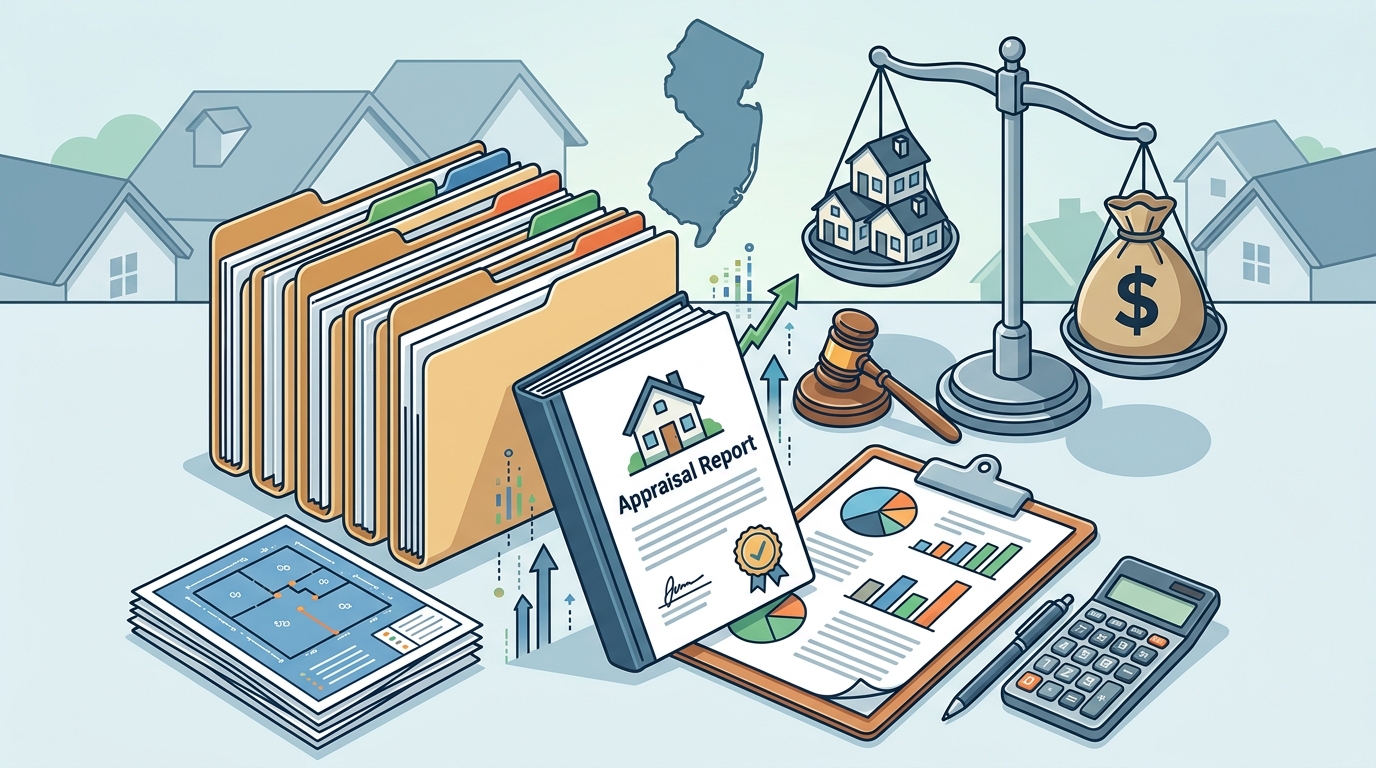
If your appeal is not settled through negotiation with the municipal assessor, it will proceed to a hearing before the County Board of Taxation. Preparation for this hearing is akin to preparing for a legal trial. You must organize your evidence logically and present it clearly. This includes your comparative sales analysis, photographs of your property, and any expert testimony you may wish to include.
During the hearing, you will have the opportunity to present your case and cross-examine the municipal appraiser. It is essential to remain calm, factual, and focused on the data. Emotional arguments about the fairness of taxes are less effective than cold, hard numbers demonstrating over-assessment. If you are represented by a professional appraiser, they will handle the technical presentation of your data, allowing you to focus on the broader narrative of your property's unique characteristics.
For a deeper understanding of the nuances involved in different types of appeals, including those related to divorce or estate settlement, you can review our expert articles and resources which cover a wide range of valuation scenarios.
Key Takeaways
- High Tax Burden: New Jersey's average effective property tax rate often exceeds 2.49%, making appeals financially significant.
- Market Value Focus: Appeals must prove that the assessed value exceeds the fair market value, not just that taxes are too high.
- Strict Deadlines: The primary filing deadline is typically January 1st for the upcoming tax year, with limited exceptions.
- Comparable Sales: Recent sales of similar properties in your immediate vicinity are the most critical evidence for your case.
- Professional Credibility: USPAP-compliant reports from state-certified appraisers carry more weight than homeowner estimates.
- Uniformity Principle: Demonstrating that your assessment is higher than similar neighboring properties strengthens your argument.
- Local Expertise: Knowledge of specific county procedures and municipal assessment trends is vital for success.
Frequently Asked Questions
What is the deadline to file a property tax appeal in New Jersey?
The standard deadline to file a tax appeal in New Jersey is January 1st of the tax year for which you are appealing. However, there are exceptions for new construction or properties that have undergone significant changes, which may have different filing windows.
Can I appeal my property taxes if I just bought the house?
Yes, if the assessed value is higher than the purchase price, you can use the sale price as strong evidence of market value. However, you must file within the appropriate deadline, which may be tied to the date of purchase or the next January 1st.
Do I need a lawyer to file a tax appeal?
No, you do not need a lawyer, but you do need strong evidence. Many homeowners hire state-certified appraisers to prepare their valuation reports, which are often more effective than legal arguments alone in establishing market value.
How does the County Board of Taxation decide my case?
The board decides based on the evidence presented, primarily focusing on whether the assessed value reflects the fair market value. They will compare your property to similar properties and consider the condition and location of your home.
What is a "date of valuation" in a tax appeal?
The date of valuation is the specific date on which the market value of the property is determined. For most annual appeals, this is October 1st of the prior year. All evidence must be relevant to that specific date.
Can I settle my tax appeal before the hearing?
Yes, many appeals are settled through negotiation with the municipal tax assessor before reaching the County Board of Taxation. This can save time and money for both parties.
What happens if I lose my tax appeal?
If you lose, you may have the option to appeal to the New Jersey Tax Court, but this involves additional costs and legal procedures. It is important to weigh the potential savings against the cost of further litigation.
Contact NJREAG for Your Appeal
Navigating the New Jersey property tax appeal process requires precision, expertise, and a deep understanding of local market dynamics. New Jersey Real Estate Appraisal Group has over 26 years of experience providing state-certified, court-ready valuations that stand up to scrutiny. Whether you are a homeowner seeking relief or a commercial investor managing assets, our team delivers accurate, defensible appraisal reports tailored to your specific needs.
Do not leave money on the table. Contact us today to schedule your consultation and secure a professional valuation that supports your appeal. Visit our About Us page to learn more about our founder's commitment to integrity and accuracy. For immediate assistance, call 908-517-3913 or fill out our contact form to get a fast quote.